BPC-157 is a 15-amino-acid peptide derived from human gastric juice. Dozens of animal studies document its gut-healing properties. Zero completed human clinical trials exist. That single fact defines everything about this compound. The preclinical evidence for BPC-157 in ulcer healing, colitis, intestinal anastomosis repair, and NSAID-induced gastropathy is among the most consistently positive in peptide research. The absence of human trial data means every claim carries a fundamental caveat. The mechanism is honest. The animal evidence is real. The human proof is missing.
What Is BPC-157?
BPC-157 (Body Protection Compound-157) is a synthetic pentadecapeptide, a chain of 15 amino acids, derived from a protein found in human gastric juice. The sequence (Gly-Glu-Pro-Pro-Pro-Gly-Lys-Pro-Ala-Asp-Asp-Ala-Gly-Leu-Val) was first isolated and characterized by Sikiric et al. at the University of Zagreb in the early 1990s.
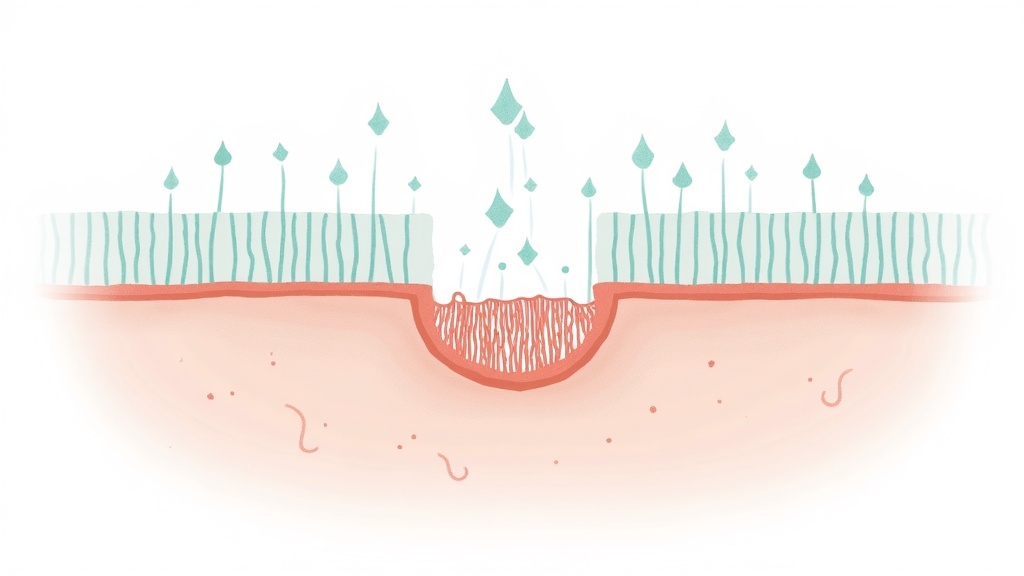
Three properties make BPC-157 unusual among peptides:
- Gastric acid stability. Most peptides are destroyed by stomach acid. BPC-157 is derived from gastric juice and is stable in acidic conditions. It can be taken orally. It does not require injection to reach the gut.
- No LD1 (lethal dose) found. In toxicology studies, researchers could not establish a lethal dose. Even at very high doses in animal models, BPC-157 did not produce toxic effects or organ damage.
- Multi-system activity. BPC-157 has documented effects on the gut, tendons, ligaments, muscle, brain, and vascular system in animal models.
⚠ No human clinical trials completed
All evidence for BPC-157 comes from animal studies (primarily rats and mice). No randomized controlled trial in humans has been completed and published for any indication. A Phase II trial for IBD (ulcerative colitis) was initiated but results have not been published. BPC-157 is not FDA-approved for any medical condition. Everything in this article reflects preclinical research only.
How BPC-157 Works in the Gut
The mechanism of BPC-157 in gut healing has been studied extensively in animal models. It operates through four interconnected pathways.
Angiogenesis and Blood Vessel Repair
BPC-157 promotes the formation of new blood vessels (angiogenesis) at sites of tissue damage. It upregulates vascular endothelial growth factor (VEGF) expression and stimulates VEGF receptor activation. In animal models of gastric ulcers and colitis, BPC-157 treatment sites showed significantly increased capillary density and granulation tissue formation compared to controls.
Mucosal healing requires adequate blood supply. Chronic gut inflammation damages the mucosal microvasculature. Restoring blood flow to damaged tissue is a prerequisite for epithelial regeneration.
Growth Factor Upregulation
BPC-157 upregulates epidermal growth factor (EGF) and its receptor (EGFR) in gastrointestinal tissue. EGF is a primary driver of epithelial cell proliferation and mucosal repair. BPC-157 also increases expression of hepatocyte growth factor (HGF) and fibroblast growth factor (FGF), both involved in tissue regeneration.
The Nitric Oxide System
BPC-157 interacts with the nitric oxide (NO) system in ways that appear to be context-dependent. It promotes NO synthesis in situations where NO is depleted (supporting vasodilation and blood flow) and reduces excessive NO production in inflammatory states (where iNOS-derived NO contributes to tissue damage). This bidirectional activity on the NO system may explain some of its protective effects across different pathological states.
Tight Junction and Mucosal Barrier
Animal studies have shown BPC-157 promotes expression of tight junction proteins and accelerates re-epithelialization of damaged mucosal surfaces. In models of intestinal permeability (leaky gut), BPC-157 reduced transepithelial permeability markers.
Animal Study Evidence
The animal evidence for BPC-157 in gut healing is unusually extensive and consistent. The vast majority comes from the research group of Predrag Sikiric at the University of Zagreb. This concentration of research from a single lab is a limitation. Independent replication by other research groups is limited.
Gastric Ulcer Healing
Sikiric et al. (1993, J Physiol Paris; multiple subsequent publications): BPC-157 accelerated healing of gastric ulcers induced by cysteamine, restraint stress, and ethanol in rat models. Treated animals showed faster re-epithelialization, increased granulation tissue, and stronger healed tissue compared to controls. Effects were dose-dependent.
Xue et al. (2004): Confirmed BPC-157 accelerated gastric ulcer healing and demonstrated increased VEGF expression at ulcer margins in the treatment group.
Colitis and IBD Models
Sikiric et al. (multiple publications, 1999-2018): BPC-157 was tested in TNBS-induced colitis (a standard model for Crohn's disease) and DSS-induced colitis (a standard model for ulcerative colitis) in rats. In both models, BPC-157 reduced disease activity scores, decreased inflammatory infiltration, reduced mucosal damage, and accelerated healing.
In the TNBS colitis model, BPC-157 reduced macroscopic and microscopic damage scores, decreased MPO activity (a marker of neutrophil infiltration), and preserved colonic mucosal architecture. The effects were observed with both injectable (intraperitoneal) and oral administration.
NSAID-Induced Gastropathy
Sikiric et al. (2003, 2006): BPC-157 protected against gastric and intestinal damage induced by NSAIDs (aspirin, diclofenac, ibuprofen) in rat models. NSAID-induced gut damage is a common clinical problem. BPC-157 both prevented damage when given prophylactically and accelerated healing when given after damage was established.
Intestinal Anastomosis Healing
BPC-157 improved healing strength and reduced complications at sites of intestinal anastomosis (surgical reconnection) in rat models. Anastomotic leak is a serious complication of bowel surgery. The bursting pressure of BPC-157-treated anastomoses was significantly higher than controls.
Fistula Healing
Sikiric et al. (2003, J Physiol Pharmacol): BPC-157 promoted healing of experimentally created colocutaneous and esophagocutaneous fistulas in rats. Fistula closure was significantly faster in treated animals.
Esophageal Damage
BPC-157 reduced esophageal damage in reflux esophagitis models and in caustic esophageal injury models. It promoted re-epithelialization and reduced stricture formation.
Human Evidence
What Exists
As of 2026, no completed, published randomized controlled trial of BPC-157 in humans exists for any indication.
Ongoing: A Phase II clinical trial for BPC-157 in ulcerative colitis was registered (under the drug name PL 14736 / PL-10). The trial was initiated by the pharmaceutical company Diagen. Published results from this trial have not appeared in peer-reviewed literature.
Why the Gap?
BPC-157 is a naturally occurring peptide that is difficult to patent broadly, reducing commercial incentive for expensive Phase II/III trials. The compound has been available as a "research peptide" through peptide supply companies, creating a market outside the pharmaceutical development pipeline. Regulatory pathways for peptides are also more complex than for small molecules.
Many promising peptides with extensive preclinical data lack human trial validation due to these structural incentives. BPC-157 is not unique in this regard.
Dosing Protocols Used in Research
| Compound | Mechanism | Evidence Level | Oral? | Availability | Cost |
|---|---|---|---|---|---|
| BPC-157 | Angiogenesis, VEGF/EGF upregulation, NO system, tight junctions | Animal only | Yes (acid-stable) | Research peptide | $$$ |
| L-Glutamine | Primary enterocyte fuel, tight junction support | Human RCTs | Yes | Supplement | $ |
| Zinc Carnosine | Mucosal coating, heat shock protein induction, anti-H. pylori | Human RCTs | Yes | Supplement | $ |
| Bovine Colostrum | IgG, lactoferrin, IGF-1, TGF-beta for barrier repair | Human RCTs | Yes | Supplement | $$ |
| TB-500 | Cell migration, actin regulation, anti-fibrotic | Animal only | No (injection) | Research peptide | $$$ |
Angiogenesis, VEGF/EGF upregulation, NO system, tight junctions
Primary enterocyte fuel, tight junction support
Mucosal coating, heat shock protein induction, anti-H. pylori
IgG, lactoferrin, IGF-1, TGF-beta for barrier repair
Cell migration, actin regulation, anti-fibrotic
Comparison of gut healing compounds by mechanism, evidence level, and accessibility.
Oral Administration
BPC-157's gastric acid stability makes oral administration viable. Most peptides require injection. In animal studies, oral BPC-157 showed equivalent efficacy to injectable administration for gastrointestinal targets.
Doses used in community protocols (extrapolated from animal research, not from human clinical trials):
- 250-500 mcg twice daily, taken on an empty stomach
- Some protocols use 500 mcg before breakfast and 500 mcg before bed
- Duration: 4-12 weeks for gut healing protocols
Injectable Administration (Subcutaneous)
- 250-500 mcg once or twice daily, injected subcutaneously near the target area (for gut: abdominal subcutaneous injection)
- Injectable bypasses first-pass metabolism but is not necessary for gut targets given BPC-157's oral stability
Important Dosing Context
These doses are extrapolated from animal studies using allometric scaling. They are not derived from human dose-finding trials. The optimal human dose, duration, and timing have not been established through clinical research.
⚠ Research compound, not a supplement
BPC-157 is sold as a "research peptide" or "research chemical." It is not a dietary supplement, not FDA-approved, and not regulated for purity or potency. If sourcing BPC-157, third-party certificate of analysis (COA) verification is essential. Contamination and underdosing are documented problems in the peptide supply market.
Safety Profile
What Animal Studies Show
Across all published animal studies, BPC-157 has shown a remarkably favorable safety profile. No lethal dose could be established in toxicology studies (described as "limit test negative"). No organ toxicity was observed even at doses many times the therapeutic range. No carcinogenic, mutagenic, or teratogenic effects were documented.
IV safety pilot (2025, Alternative Therapies in Health and Medicine): Two healthy adults received intravenous BPC-157 infusions up to 20mg. Well-tolerated, no adverse events, no clinically meaningful changes in vital signs, ECGs, or lab biomarkers. Two participants is not a safety profile.
What We Don't Know
- Long-term safety in humans at any dose
- Drug interactions (theoretical concern with compounds affecting the NO system, VEGF pathway, or coagulation)
- Safety in pregnancy, lactation, or pediatric use
- Effects on tumor angiogenesis. BPC-157 promotes VEGF and angiogenesis, pathways that tumors exploit for blood supply. No evidence exists that BPC-157 promotes tumor growth, but the mechanism warrants caution.
Reported Side Effects (Community Reports)
From user reports in biohacking and functional medicine communities (not from clinical trials):
- Generally well-tolerated
- Occasional nausea with oral administration (typically resolves)
- Rare reports of dizziness or lightheadedness
- Injection site reactions (redness, swelling) with subcutaneous use
Legal and Regulatory Status
FDA Position
BPC-157 is not FDA-approved for any indication. It is not classified as a dietary supplement (it is a synthetic peptide, not found in food). In 2023, the FDA placed BPC-157 in Category 2 for bulk drug substances, meaning insufficient evidence for safety. Compounding pharmacies cannot legally use it. The FDA has issued warning letters to companies marketing BPC-157 for therapeutic use.
WADA Status
The World Anti-Doping Agency (WADA) added BPC-157 to its prohibited substance list in 2022, classifying it under peptide hormones and growth factors. Athletes in WADA-governed sports cannot use BPC-157.
Availability
BPC-157 is available from peptide research chemical suppliers. It is sold "for research purposes only," a legal designation that places the responsibility for use on the purchaser. Quality varies significantly between suppliers. Always verify third-party lab testing (COA) for identity, purity, and endotoxin levels.
BPC-157 vs. Conventional Gut Healing Compounds
L-Glutamine
L-glutamine is the primary energy source for enterocytes (intestinal epithelial cells) and has human clinical evidence supporting its role in gut barrier maintenance. A 2017 RCT (Zhou et al.) demonstrated L-glutamine reduced intestinal permeability in IBS-D patients. L-glutamine is FDA-recognized as a medical food ingredient, widely available, and inexpensive. Dose: 5-10g/day. For most people starting a gut healing protocol, L-glutamine is the more evidence-supported first-line choice. See our L-glutamine for leaky gut guide for the full dosing protocol and evidence review.
Zinc Carnosine
Zinc carnosine (zinc-L-carnosine) has human RCT evidence for gastric mucosal protection and H. pylori-associated damage. Mahmood et al. (2007) demonstrated zinc carnosine improved gut permeability markers in healthy volunteers taking NSAIDs. It is available as a dietary supplement. Dose: 75-150mg/day. Evidence grade for gut healing: B (human RCTs exist).
Colostrum
Bovine colostrum contains immunoglobulins, lactoferrin, and growth factors (IGF-1, TGF-beta) that support mucosal barrier function. Playford et al. (2001, Gut) demonstrated colostrum reduced NSAID-induced intestinal permeability increase by 3-fold vs. placebo. Available as a supplement. Dose: 10-20g/day. Evidence for gut barrier: B.
How BPC-157 Compares
BPC-157's preclinical evidence suggests it may be more potent than these compounds for specific applications: ulcer healing, anastomosis repair, fistula healing. Its multi-pathway mechanism (angiogenesis, growth factors, NO system, tight junctions) is broader than any single conventional compound. It lacks the human trial validation that L-glutamine, zinc carnosine, and colostrum possess. For autoimmune gut healing, start with compounds that have human evidence. Consider BPC-157 as an advanced adjunct if first-line interventions prove insufficient.
BPC-157 in Autoimmune Gut Conditions
Relevance for Crohn's Disease and Ulcerative Colitis
The TNBS and DSS colitis models used in BPC-157 research are standard preclinical models for Crohn's disease and ulcerative colitis, respectively. BPC-157 showed benefit in both models, suggesting potential relevance for IBD.
For autoimmune gut conditions, BPC-157's mechanism addresses several aspects simultaneously: mucosal healing (the primary therapeutic target in IBD), angiogenesis restoration (damaged in chronic inflammation), tight junction repair (relevant to intestinal permeability), and anti-inflammatory activity.
IBD requires gastroenterologist supervision. BPC-157 should not substitute evidence-based IBD treatments (5-ASA, immunomodulators, biologics). If considering BPC-157 as an adjunct, discuss with your gastroenterologist.
Relevance for Intestinal Permeability (Leaky Gut)
Intestinal permeability is implicated in the pathogenesis of multiple autoimmune conditions (Fasano et al., zonulin and autoimmunity), including Hashimoto's thyroiditis, alopecia areata, and inflammatory bowel disease. BPC-157's documented effects on tight junction expression and transepithelial permeability in animal models make it mechanistically relevant. The compound's origin in gastric juice suggests it may play a physiological role in mucosal maintenance.
For autoimmune patients addressing intestinal permeability as part of a broader protocol, BPC-157 fits as a Tier 3 (advanced) intervention after dietary changes, L-glutamine, zinc carnosine, and probiotics have been implemented. Gut barrier dysfunction is upstream of many autoimmune conditions — see the Hashimoto's natural treatment protocol for how gut healing fits into a comprehensive framework, and the supplement guide for evidence-graded options that support gut and immune function simultaneously.
TB-500 (Thymosin Beta-4): How It Differs
TB-500 (a fragment of thymosin beta-4) is another peptide commonly discussed alongside BPC-157 in regenerative contexts. Key differences:
| BPC-157 | TB-500 | |
|---|---|---|
| Origin | Human gastric juice | Thymus gland protein |
| Primary mechanism | Angiogenesis, growth factor upregulation | Cell migration, actin regulation, anti-fibrotic |
| Oral stability | Stable in gastric acid; oral viable | Not acid-stable; requires injection |
| Gut-specific evidence | Extensive (dozens of studies) | Limited for gut specifically |
| Systemic anti-inflammatory | Moderate | Strong |
| WADA prohibited | Yes (2022) | Yes |
Some protocols combine BPC-157 and TB-500, using BPC-157 for direct gut healing and TB-500 for systemic anti-inflammatory and anti-fibrotic support. No published research on the combination exists.
Your Gut Healing Protocol Framework
Tier 1: Foundation (Evidence-Based, Start Here)
- Dietary intervention. Remove processed foods, gluten (trial), alcohol, NSAIDs if possible. Anti-inflammatory diet or AIP diet.
- L-Glutamine. 5-10g/day, mixed in water, taken on empty stomach. Primary enterocyte fuel.
- Probiotics. Multi-strain, 10B+ CFU/day. Focus on Lactobacillus and Bifidobacterium strains.
- Zinc carnosine. 75mg twice daily. Human RCT evidence for mucosal protection.
Tier 2: Enhanced (Moderate Evidence)
- Colostrum. 10-20g/day. Immunoglobulins + growth factors for barrier support.
- Omega-3 EPA+DHA. 2,000-3,000mg/day. Anti-inflammatory.
- Vitamin D3 + K2. Target 60-80 ng/mL. Immune regulation + gut barrier expression.
- Prebiotic fiber. Diverse sources: inulin, resistant starch, varied vegetables.
Tier 3: Advanced (Preclinical Evidence Only)
- BPC-157. 250-500 mcg twice daily oral, 4-12 weeks. Research compound. Verify COA.
- LDN. 1.5-4.5mg at bedtime. Requires prescription. TLR4 modulation.
Timeline
Gut healing is measured in months. Expect 4-8 weeks for initial symptom improvement on Tier 1 interventions. Full mucosal healing (if assessed by endoscopy or markers like fecal calprotectin) typically requires 3-6 months. Do not assess BPC-157 or any single intervention in isolation at 2 weeks.
Frequently Asked Questions
Does BPC-157 actually heal the gut?
In animal models, BPC-157 consistently accelerates gut mucosal healing across multiple damage models: ulcers, colitis, NSAID damage, fistulas, anastomosis. The mechanism is well-characterized. No human clinical trial has confirmed these effects in people. The animal evidence is the strongest available for any peptide in gut healing. Animal evidence does not guarantee human efficacy.
Is BPC-157 safe to take orally?
BPC-157 is stable in gastric acid, unlike most peptides. Animal toxicology studies found no lethal dose and no organ toxicity. Long-term human safety has not been studied. Oral BPC-157 is generally well-tolerated in community reports, with occasional nausea as the main side effect.
How long should you take BPC-157 for gut healing?
Community protocols typically use 4-12 weeks. This is not based on human clinical data. Animal studies show accelerated healing within days to weeks. A reasonable approach: 8-week course at 250-500 mcg twice daily, then reassess symptoms.
Is BPC-157 legal?
BPC-157 is not FDA-approved and is not a dietary supplement. It is available as a "research chemical" from peptide suppliers. It is prohibited by WADA for athletes. It is not a controlled substance in most jurisdictions. Purchasing and possessing it is legal; marketing it for human therapeutic use is not.
Can BPC-157 help with Crohn's disease?
BPC-157 has shown benefit in both TNBS and DSS colitis models in rats, standard preclinical models for Crohn's and UC. The mechanism (mucosal healing, anti-inflammatory, angiogenesis) is relevant to IBD pathology. Crohn's disease requires gastroenterologist management. BPC-157 should only be considered as an adjunct to evidence-based treatment.
Is BPC-157 better than L-glutamine for gut healing?
L-glutamine has human clinical trial evidence for reducing intestinal permeability. BPC-157 has stronger preclinical evidence for mucosal healing but no human trials. For most people, L-glutamine is the better starting point: proven in humans, inexpensive, widely available, and safe. BPC-157 is a Tier 3 option after Tier 1 foundations are in place.
What is the difference between BPC-157 and TB-500?
BPC-157 originates from gastric juice, is acid-stable (oral), and has extensive gut-specific evidence. TB-500 originates from the thymus, requires injection, and has stronger evidence for systemic inflammation and tissue repair (tendons, muscle). For gut healing specifically, BPC-157 has far more supporting research.
Does BPC-157 promote cancer growth?
BPC-157 promotes VEGF and angiogenesis, pathways that tumors exploit for blood supply. This is a valid theoretical concern. No animal study has shown BPC-157 promoting tumor growth, and some have shown anti-tumor properties. The angiogenesis mechanism warrants caution in anyone with active or suspected malignancy. Do not use BPC-157 if you have an active cancer diagnosis without explicit oncologist clearance.
Evidence Summary
| Supplement | Evidence Grade | Key Evidence | Dose Range |
|---|---|---|---|
| BPC-157 (Gastric Ulcers) | Grade C | Sikiric et al. 1993+: accelerated healing in cysteamine, ethanol, and stress ulcer rat models; increased VEGF; dose-dependent. No human RCT. | 250-500 mcg oral twice daily |
| BPC-157 (Colitis/IBD) | Grade C | Sikiric et al. 1999-2018: reduced disease scores in TNBS + DSS colitis models; oral and injectable effective. Phase II UC trial initiated but unpublished. | 250-500 mcg oral twice daily |
| BPC-157 (NSAID Gastropathy) | Grade C | Sikiric et al. 2003, 2006: prevented and healed aspirin/diclofenac/ibuprofen gut damage in rats; prophylactic + therapeutic. | 250-500 mcg oral twice daily |
| L-Glutamine | Grade B | Zhou et al. 2017 RCT: reduced intestinal permeability in IBS-D; primary enterocyte fuel; FDA-recognized medical food ingredient. | 5-10 g/day |
| Zinc Carnosine | Grade B | Mahmood et al. 2007 RCT: reduced NSAID-induced gut permeability; mucosal protection; approved in Japan for gastric ulcers. | 75-150 mg/day |
| Bovine Colostrum | Grade B | Playford et al. 2001 (Gut): 3-fold reduction in NSAID-induced permeability increase vs. placebo; immunoglobulins + growth factors. | 10-20 g/day |
| BPC-157 (Fistula/Anastomosis) | Grade C | Sikiric et al. 2003: accelerated fistula closure and anastomotic healing; increased bursting pressure. Animal models only. | 250-500 mcg oral or injectable |
Sikiric et al. 1993+: accelerated healing in cysteamine, ethanol, and stress ulcer rat models; increased VEGF; dose-dependent. No human RCT.
250-500 mcg oral twice daily
Sikiric et al. 1999-2018: reduced disease scores in TNBS + DSS colitis models; oral and injectable effective. Phase II UC trial initiated but unpublished.
250-500 mcg oral twice daily
Sikiric et al. 2003, 2006: prevented and healed aspirin/diclofenac/ibuprofen gut damage in rats; prophylactic + therapeutic.
250-500 mcg oral twice daily
Zhou et al. 2017 RCT: reduced intestinal permeability in IBS-D; primary enterocyte fuel; FDA-recognized medical food ingredient.
5-10 g/day
Mahmood et al. 2007 RCT: reduced NSAID-induced gut permeability; mucosal protection; approved in Japan for gastric ulcers.
75-150 mg/day
Playford et al. 2001 (Gut): 3-fold reduction in NSAID-induced permeability increase vs. placebo; immunoglobulins + growth factors.
10-20 g/day
Sikiric et al. 2003: accelerated fistula closure and anastomotic healing; increased bursting pressure. Animal models only.
250-500 mcg oral or injectable
This article is for educational purposes only and does not constitute medical advice. BPC-157 is a research compound, not an FDA-approved medication or dietary supplement. All evidence discussed is from animal studies unless explicitly stated otherwise. Gut conditions including IBD, ulcers, and intestinal permeability require proper medical diagnosis and physician supervision. Never substitute BPC-157 for evidence-based medical treatment. Always discuss with your physician before using any research compound.
For related peptide research, see our guides on KPV for gut inflammation (complementary NF-kB mechanism), TB-500 for tissue repair, and the full peptides for autoimmune disease guide.
Find out which interventions are right for your specific condition and profile. Take the free 3-minute AutoimmuneFinder quiz to get your personalized protocol.