Key takeaways
The 30-second version
- The London AS Diet is a low-starch diet for ankylosing spondylitis created by Professor Alan Ebringer in London in the early 1980s.
- It removes bread, potatoes, pasta, rice, cakes and beans. You still eat meat, fish, eggs, non-starchy vegetables, most fruit, nuts and fats.
- The theory: starch feeds a gut bacterium called Klebsiella, and its proteins look like HLA-B27 and spine tissue, so the immune system may attack both.
- The proof is thin. One small 1996 study without a control group looked good. No randomized trial has published results yet. We grade it C.
- If you try it, run a careful 3-month trial, track your symptoms and blood tests, protect your fibre and calcium, and never stop your NSAID or biologic without your rheumatologist.
Want a version built around your symptoms and labs?
Take the 3-min quiz →The London AS Diet is a low-starch diet for ankylosing spondylitis (AS), developed by immunologist Alan Ebringer at the Middlesex Hospital and King's College London. It removes bread, potatoes, pasta, rice, cakes and other starchy foods, on the theory that starch feeds Klebsiella pneumoniae in the bowel and that this bacterium drives AS in people who carry HLA-B27. The only published outcome study, Ebringer and Wilson (1996), followed 36 patients for nine months and reported falling ESR and IgA, but it had no control group. A 2018 systematic review rated that evidence very low quality. Our grade: C.
That is the short answer. The long answer is more useful, because the London diet sits on one of the most detailed microbial hypotheses in rheumatology, and the hypothesis has both strong supporters and serious critics. This guide covers the history, the science, the arguments against, and a practical way to test the diet on yourself without risking your treatment.
For the wider picture of eating with AS, including Mediterranean and AIP approaches, see our ankylosing spondylitis diet guide. This article goes deep on the London plan alone.
What is the London AS Diet?
The London AS Diet, also called the London diet, the Ebringer diet, the Klebsiella diet or simply the low-starch diet, is a dietary program that restricts starch to reduce disease activity in ankylosing spondylitis. Patients and clinicians in the UK have used the name for four decades because it came out of the London AS clinic run by Ebringer's group.
The rule is simple. Cut foods that are rich in starch, the long chains of glucose stored in grains, tubers, legumes and unripe fruit. Simple sugars are not the target. Protein and fat are unrestricted. Ebringer and Wilson's 1996 paper summarized it as a reduced intake of "bread, potatoes, cakes and pasta."
The diet is used alongside medical treatment, never instead of it. Even its originators framed it as an addition to standard therapy (Rashid, Wilson and Ebringer, 2013).
Who was Alan Ebringer?
Alan Ebringer was a professor of immunology at King's College London, and his AS research was closely tied to the Middlesex Hospital in London, whose trustees helped fund it. From the 1970s his group published a long series of studies arguing that Klebsiella pneumoniae triggers AS, and from the early 1980s the clinic began advising patients to lower their starch intake.
The diet reached a mass audience through Carol Sinclair, a patient with AS and irritable bowel symptoms who wrote The IBS Low-Starch Diet with a foreword by Ebringer. Much of what circulates online as "the London diet" traces back to that book and to patient forums, not to formal clinical protocols.
The Klebsiella hypothesis: how starch, bacteria and HLA-B27 connect
The London AS Diet stands or falls on a four-step chain of reasoning. Each step has laboratory support. The chain as a whole has never been proven in people.
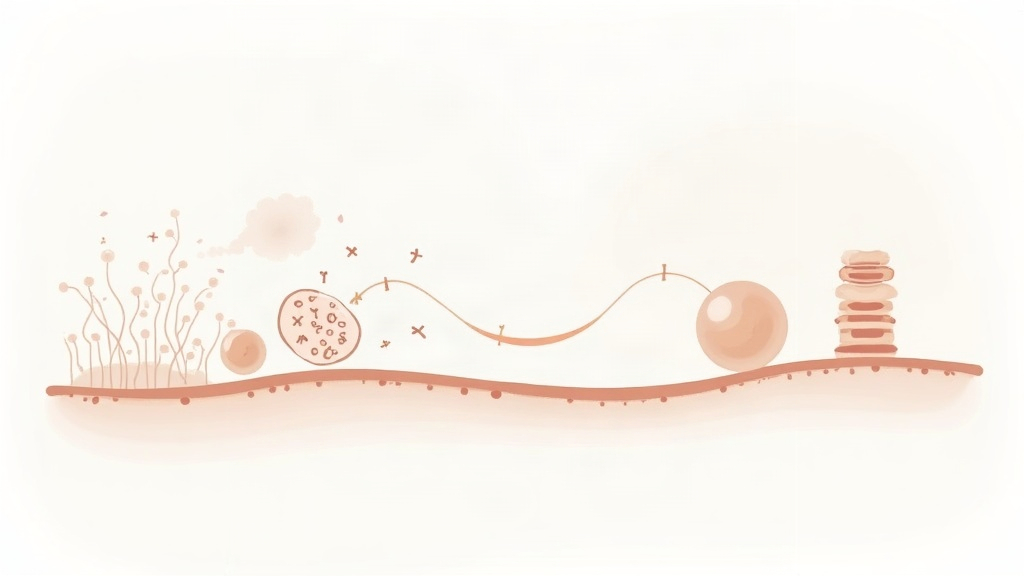
Step 1: HLA-B27 creates the susceptibility
Most people with AS carry the gene variant HLA-B27, a molecule that displays protein fragments to the immune system. Carrying it raises AS risk sharply, yet most HLA-B27 carriers never develop the disease. Something in the environment has to pull the trigger. Ebringer's group proposed that the trigger lives in the gut. Our companion piece on the HLA-B27 diet covers the genetics in more detail.
Step 2: Klebsiella shows up in active disease
In 1978, Ebringer's group cultured stool from 163 AS patients on 433 occasions. Active inflammatory disease was strongly associated with Klebsiella pneumoniae in the faeces (P less than 0.001), and in patients with inactive disease a positive culture predicted a later flare (Ebringer RW et al., Annals of the Rheumatic Diseases, 1978).
Antibody studies followed. In a 1997 Japanese study, patients with active AS had specific rises in IgA antibodies against Klebsiella compared with RA patients and healthy controls (p less than 0.001), while patients with inactive AS did not (Tani et al., Journal of Rheumatology, 1997). By 2013 the group counted supportive antibody studies from 16 countries (Rashid, Wilson and Ebringer, 2013).
Step 3: Molecular mimicry
The striking part of the theory is structural. In 1988, Schwimmbeck and Oldstone reported six consecutive amino acids, glutamine-threonine-aspartic acid-arginine-glutamic acid-aspartic acid (QTDRED), shared by HLA-B27 (residues 72 to 77) and Klebsiella nitrogenase (residues 188 to 193). Antibodies against one cross-reacted with the other, and with joint tissue from HLA-B27-positive patients. Sera from 27% of AS patients bound these peptides (Schwimmbeck and Oldstone, American Journal of Medicine, 1988).
Ebringer's group later described two more overlaps in Klebsiella pullulanase enzymes. A DRDE sequence in pulD resembles DRED in HLA-B27, and Gly-X-Pro repeats in pulA match collagen types I, III and IV, which are abundant in the spine and entheses (Rashid, Wilson and Ebringer, 2013).
Step 4: Starch feeds Klebsiella
Pullulanase is a starch-splitting enzyme, and Klebsiella is well equipped to live on starch that escapes digestion in the small intestine. Ebringer argued that bowel bacteria depend on dietary starch for growth, so cutting starch should shrink the population. In the 1996 paper, a low-starch diet lowered total serum IgA in healthy volunteers as well as in patients, which the authors took as a sign of a smaller bowel flora (Ebringer and Wilson, Clinical Rheumatology, 1996).
The group extended the idea to Crohn's disease, which shares genes and gut lesions with AS (Rashid et al., 2009), and to the rise of AS among Inuit populations after a switch from a high-protein marine diet to a Westernized high-starch one (Rashid, Wilson and Ebringer, Rheumatology International, 2015). The Inuit argument is a hypothesis built on trends, not a study of diet and outcomes.
Ebringer and Wilson 1996: what the study showed, and what it didn't
This is the paper every London diet article cites. Few quote it accurately.
What it was. A longitudinal open study of 36 patients with active AS at the London AS clinic, followed for about nine months after reducing dietary starch. Published in Clinical Rheumatology (1996), volume 15, supplement 1.
What it reported. Most patients showed falls in erythrocyte sedimentation rate (ESR, a blood marker of inflammation) and total IgA. Symptoms declined, in some cases disappeared, and some patients cut their anti-inflammatory drug use. The 2018 systematic review notes the ESR drop was statistically significant (p less than 0.001) (Macfarlane et al., European Journal of Rheumatology, 2018). The authors also said they had treated more than 450 AS patients with the diet since 1983, and that over half needed no medication at follow-up.
What it didn't do. There was no control group, no randomization and no blinding. The diet itself was loosely defined. Exact figures for symptom scores and drug reductions were not reported. The 450-patient figure is a clinic impression, not an analysed cohort. And the authors were the originators of the hypothesis they were testing.
What it can't tell you. AS activity rises and falls on its own. Patients enrolled while "active" tend to drift toward their average over months, a pattern called regression to the mean. Weight loss, better overall diet and the attention of an enthusiastic clinic can all lower ESR. Without a comparison group, none of these can be separated from a true starch effect.
The authors' own conclusion was cautious: the role of a low-starch diet in AS "requires further evaluation."
Later evidence and the case against
Thirty years on, the evidence has grown sideways rather than forward. Mechanistic papers multiplied. Clinical trials did not.
Not everyone finds Klebsiella
The Klebsiella link has always been disputed outside London. A Toronto case-control study of 25 families with two or more members affected by AS compared 57 affected and 37 unaffected relatives with 34 healthy controls. T-cell and antibody responses to Klebsiella, Salmonella, Yersinia and Chlamydia did not differ between affected and unaffected family members (Stone et al., Rheumatology, 2004). The title says it plainly: the results "do not confirm a dominant role for Klebsiella pneumonia."
Modern sequencing also complicates the story. When Costello and colleagues analysed terminal ileum biopsies from recently diagnosed AS patients not yet on TNF inhibitors, the gut microbiome was clearly different from controls (P less than 0.001), but the differences were driven by families such as Lachnospiraceae, Ruminococcaceae and Bacteroidaceae. Klebsiella was not among the signals reported (Costello et al., Arthritis and Rheumatology, 2015).
The gut still matters
The broader idea that gut bacteria drive AS has held up well. HLA-B27 transgenic rats raised germ-free do not develop gut or joint inflammation, while their skin and genital lesions still appear (Taurog et al., Journal of Experimental Medicine, 1994). Ileocolonoscopy studies from Ghent found inflammatory gut lesions in 20% to 70% of patients across the spondyloarthritis family, most without gut symptoms (De Keyser et al., Rheumatic Disease Clinics of North America, 1998), and AS and Crohn's disease share many risk genes.
So the gut-joint axis is real. What remains uncertain is whether Klebsiella in particular is the culprit, and whether starch restriction moves the needle in people.
Systematic reviews
The most rigorous review of diet and AS screened Medline, Embase and Cochrane and found 16 studies: nine observational and seven interventional. It concluded that evidence on diet and AS is "extremely limited and inconclusive," and rated the low-starch outcomes as very low quality (Macfarlane et al., 2018).
A 2026 review in Rheumatology International reached a similar verdict. Restrictive diets such as low-starch "offer theoretical anti-inflammatory benefits via gut microbiota modulation but pose risks for unsupervised micronutrient deficiencies." Evidence for specific diets in axial spondyloarthritis remains limited and mostly observational, with few randomized trials (Sezgin and Yuksel, 2026).
A cross-sectional Swedish study of AS patients found no correlation between overall diet and disease activity, although 27% reported that certain foods aggravated gut symptoms (Sundström et al., Clinical Rheumatology, 2011). That fits the clinical impression: a minority of patients respond strongly to food changes, and most do not.
The trial we are still waiting for
A randomized trial from the University of Porto (NCT04386538) set out to settle the question. It planned to enrol about 150 AS patients and compare a diet cutting starch by at least 40% with general healthy-eating advice for six weeks, measuring faecal Klebsiella, ESR, CRP and BASDAI. Recruitment began in January 2022. The registry was last updated that month, the status is listed as unknown, and no results have been posted or published as of October 2026.
Our evidence grade
| Question | Evidence | Grade |
|---|---|---|
| Does the London AS Diet reduce AS activity? | One uncontrolled study (n=36), clinic reports, no RCT results | C |
| Is Klebsiella linked to active AS? | Supportive culture and antibody data from London and partner centres; negative family study; not prominent in sequencing studies | C (contested) |
| Do gut bacteria drive HLA-B27 disease? | Germ-free rat models, ileal inflammation, shared genetics, microbiome differences | B |
| Is the diet safe? | Low risk if fibre, calcium and energy are protected; deficiency risk if done carelessly | Safe with planning |
London AS Diet food list: what to eat and what to avoid
The diet works on starch content, so the most useful tool is a traffic-light chart rather than a fixed list. Brands and recipes vary, which is why followers of the diet test foods themselves.
London AS Diet food chart: green, amber, red
Grouped by typical starch content. Brands and recipes vary, so the iodine test beats any list. Starch is the target here, not sugar or fat.
Green: eat freely
Protein
- Fresh meat and poultry
- Fish and shellfish
- Eggs
- Plain unprocessed cuts (no breading or fillers)
Vegetables
- Leafy greens and salad
- Broccoli, cauliflower, cabbage
- Courgette/zucchini, cucumber, peppers
- Tomatoes, mushrooms, onions, asparagus
Fruit
- Apples, pears, citrus
- Berries, grapes, melon
- Fully ripe fruit in general
Fats and others
- Olive oil, butter, avocado
- Almonds, walnuts, pecans, most seeds
- Hard cheese, plain yogurt (if tolerated)
- Herbs, spices, vinegar, tea, coffee
Amber: small portions, test first
Vegetables
- Carrots, beetroot, swede
- Pumpkin and butternut squash
- Green peas, sweetcorn in small amounts
- Parsnips (higher end of amber)
Fruit and nuts
- Bananas: the riper, the less starch
- Cashews and pistachios
- Dried fruit (sugar load, not starch)
Hidden starch
- Sausages, burgers, meatballs
- Gravies, soups and sauces thickened with flour or cornflour
- Ready meals and many low-fat products
- Some tablets and capsules (starch is a common filler)
Dairy (some versions)
- Milk and soft cheese: not part of the original starch rule; some followers limit them because Klebsiella can grow on lactose
Red: remove during the trial
Grains
- Bread of every kind, including sourdough and gluten-free
- Pasta, noodles, couscous
- Rice, oats, quinoa, buckwheat
- Breakfast cereals, crackers, cakes, biscuits
Starchy roots
- Potatoes (all forms, including chips and crisps)
- Sweet potato, yam, cassava
- Plantain and green bananas
Legumes
- Beans, lentils, chickpeas
- Hummus and bean-based snacks
Other
- Corn products: tortillas, polenta, popcorn
- Flour-based batters and breadcrumbs
- Beer and other grain-based drinks
- Chestnuts and chestnut flour
Never stop or change prescribed medication to accommodate the diet. Check tablet fillers with your pharmacist rather than skipping doses.
Foods allowed on the London diet
- All fresh meat, poultry, fish, shellfish and eggs. Avoid anything breaded, battered or bulked with rusk or flour.
- Non-starchy vegetables in quantity: leafy greens, broccoli, cauliflower, cabbage, courgette, peppers, tomatoes, cucumber, mushrooms, onions, asparagus.
- Most fruit, especially when fully ripe. Apples, pears, citrus, berries, grapes and melon are low in starch.
- Fats: olive oil, butter, avocado, nuts such as almonds and walnuts, and seeds.
- Drinks: water, tea, coffee. Wine and spirits contain no starch but carry their own problems for an inflammatory disease.
Foods to avoid
- Bread of every kind, including sourdough and gluten-free loaves, which are often made from rice, potato or tapioca starch.
- Potatoes and other starchy roots: sweet potato, yam, cassava, plantain.
- Pasta, rice and other grains: oats, quinoa, couscous, buckwheat, breakfast cereals.
- Legumes: beans, lentils, chickpeas.
- Corn products, cakes, biscuits, pastry, batters and breadcrumbs.
- Beer and other grain-based drinks.
Hidden starch
Starch is cheap, so food manufacturers use it everywhere. Sausages, burgers, gravies, soups, sauces, ready meals and many "low-fat" products contain flour, cornflour or modified starch. Starch is also a common filler in tablets and capsules. Do not skip a prescribed medicine because of this. The amount is tiny, and your pharmacist can tell you whether a starch-free formulation exists.
Dairy
The 1996 description of the diet targets starch and does not mention dairy. Ebringer's group did cite laboratory data showing Klebsiella also grows on simple sugars, including lactose (Rashid, Wilson and Ebringer, 2013), and some followers limit milk and soft cheese for that reason. A separate small study by Appelboom and Durez (1994) tried dairy exclusion in 25 patients with spondyloarthropathy for six weeks and reported improvement in about half, but it too was uncontrolled (reviewed in Macfarlane et al., 2018). If you cut dairy, replace the calcium. AS already raises the risk of osteoporosis.
The iodine starch test: how to check foods at home
The iodine test is the most practical part of the London AS Diet, and it rests on simple chemistry. Iodine slots into the coiled structure of starch and turns it blue-black. Without starch, iodine stays orange-brown.
What you need: a small bottle of iodine tincture or Lugol's iodine from a pharmacy, a dropper, and a white plate.
How to do it:
- Cut a thin slice or take a small sample of the food. For a sauce or soup, spread a spoonful on the plate.
- Add one drop of iodine.
- Watch for 30 to 60 seconds. Orange-brown means little or no starch. A blue, purple or black colour means starch is present. The faster and darker the change, the more starch.
- Throw the tested sample away. Never eat food you have put iodine on, and keep the bottle away from children.
A few patterns surprise people. A green banana turns black almost instantly; a fully ripe, spotty banana barely changes, because ripening converts starch to sugar. Raw apples are usually clear, but unripe ones may show traces. Many processed meats change colour where the filler sits.
How to trial the London AS Diet safely for 3 months
Ebringer's patients were followed for many months. Two weeks of half-hearted starch cutting tells you nothing. A structured, time-limited experiment gives you an answer you can trust and a clear point to stop if it isn't helping.
A 3-month London AS Diet trial
A structured self-experiment, not a cure. Keep all prescribed treatment unchanged and review the results with your rheumatologist.
- Weeks -2 to 0Stage 1
Baseline
Tell your rheumatologist
Agree that medication stays unchanged during the trial
Record a baseline
BASDAI score, morning stiffness minutes, night pain 0-10, NSAID doses per week
Ask for blood work
CRP and ESR; add vitamin D, B12, ferritin if not checked recently
Clear the kitchen
Buy an iodine tincture and plan a week of green-zone meals
- Weeks 1-2Stage 2
Step down
Halve the big four
Bread, potatoes, pasta, rice. Replace with vegetables and protein
Drop hidden starch
Sauces, breaded foods, sausages, snack foods
Expect a dip
Some people feel tired or hungry for a few days as carbs fall
- Weeks 3-10Stage 3
Strict phase
Red zone out completely
Amber foods only after an iodine test and in small portions
Protect fibre
Aim for 5+ portions of non-starchy vegetables and fruit daily
Log weekly
Same measures as baseline, same day each week
Watch weight
Unintended loss of more than 5% is a reason to loosen the diet and see a dietitian
- Weeks 11-13Stage 4
Judge and reintroduce
Repeat CRP and ESR
Compare with baseline alongside your symptom log
Challenge one food at a time
For example, a normal portion of potato daily for 3 days, then wait 4 days
Decide
Clear benefit: keep a looser version long term. No change: return to a Mediterranean pattern
Before you start
Tell your rheumatologist, and ask for baseline blood tests plus a second set at the end. Your medication stays the same throughout. CRP and ESR are the obvious markers. Vitamin D, B12 and ferritin are worth checking if they have not been measured recently, since restrictive diets can shift them.
Record two weeks of normal eating. Use the BASDAI questionnaire (free online), the minutes of morning stiffness, night pain from 0 to 10, and how many NSAID doses you take each week. Without a baseline, you will be comparing against memory, and memory flatters change.
Weeks 1 to 2: step down
Halve bread, potatoes, pasta and rice. Replace them with larger portions of vegetables and protein. Remove obvious hidden starch. Many people feel tired, irritable or hungry for a few days as carbohydrate intake falls. This usually settles within a week.
Weeks 3 to 10: strict phase
Remove red-zone foods completely. Use amber foods only after an iodine test and in small amounts. This is the period that tests the hypothesis, so consistency matters more than perfection on any single day.
Protect three things:
- Fibre. Five or more portions of non-starchy vegetables and fruit a day, plus nuts and seeds. Starch restriction can strip fermentable fibre out of the diet, and the bacteria that make butyrate, a fatty acid that calms the gut lining, depend on it.
- Energy. Unintended weight loss of more than 5% is a signal to loosen the diet and see a dietitian.
- Calcium and vitamin D, especially if you also cut dairy.
Weeks 11 to 13: judge and reintroduce
Repeat the same measurements and blood tests. Then reintroduce one starchy food at a time: a normal portion daily for three days, followed by four days off it while you watch for stiffness, pain or gut symptoms. Potatoes and bread are the most informative tests because they are the largest starch sources for most people.
If you improved clearly (for example, a BASDAI drop of two points or more, less NSAID use, lower CRP) and symptoms return with reintroduction, you have a personal answer. Most long-term followers settle on a looser version: low starch most days, with planned exceptions.
If nothing changed, you have learned something too. Return to a Mediterranean-style pattern, which has broader evidence for cardiovascular health, a real concern in AS. Our autoimmune diet comparison sets out the options side by side.
The London diet with NSAIDs, biologics and other treatment
The London AS Diet is an add-on. The 2022 ASAS-EULAR recommendations put exercise and NSAIDs first, then biologic DMARDs (TNF inhibitors or IL-17 inhibitors) or JAK inhibitors for persistently active disease (Ramiro et al., Annals of the Rheumatic Diseases, 2023). These drugs have randomized evidence for symptoms, function and, in some studies, slowing structural progression. No diet does.
NSAIDs. There is no interaction between the diet and naproxen, ibuprofen, celecoxib or similar drugs. Ebringer reported that some patients reduced their NSAID use on the diet. If your symptoms improve, talk to your doctor about lowering the dose rather than stopping on your own. NSAIDs should be taken with food; a protein-and-vegetable meal works fine.
TNF inhibitors (adalimumab, etanercept, infliximab, certolizumab, golimumab). No dietary interaction. Many patients run the diet alongside a biologic to see if it adds anything.
IL-17 inhibitors (secukinumab, ixekizumab, bimekizumab). These drugs carry warnings about new or worsening inflammatory bowel disease, and research suggests they can disturb the gut microbiome. A completed French trial, RESPOND-IL17 (NCT05812157), tested fibre supplementation to correct gut dysbiosis during IL-17 therapy; results have not yet been posted. If you take an IL-17 inhibitor, keep fibre high from non-starchy vegetables, fruit, nuts and seeds, and report any new diarrhoea, blood or abdominal pain promptly.
Sulfasalazine and methotrexate are used mainly for peripheral joint involvement. Neither interacts with the diet. If you take methotrexate, keep up your folic acid.
Antibiotics. Ebringer's group discussed antibacterial strategies against Klebsiella, but repeated antibiotics are not a recommended AS treatment. Do not take them for this purpose.
Diet pairs well with the treatments in our ankylosing spondylitis natural treatment guide, where daily exercise is the one natural intervention with Grade A evidence. Vitamin D and omega-3 are covered in our supplement evidence review.
Who should not try a strict low-starch diet
Talk to your doctor or a registered dietitian first, and in most cases choose a gentler approach, if any of these apply:
- Pregnancy or breastfeeding. Energy and folate needs are high.
- Diabetes on insulin or sulfonylureas. Cutting carbohydrate quickly can cause low blood sugar unless doses are adjusted.
- A history of eating disorders. Restrictive food rules can reopen old patterns.
- Low body weight or recent unexplained weight loss.
- Active Crohn's disease or colitis, where diet is best managed with your gastroenterologist. Our Crohn's supplement guide covers nutrient gaps in IBD.
- Osteoporosis or osteopenia, if the version you follow also removes dairy.
See your doctor promptly, diet or not, if you develop a red, painful eye (possible uveitis), bloody diarrhoea, new chest pain, or sudden worsening of back pain at night.
How the London diet fits with other AS diet approaches
The London plan is the most AS-specific diet ever proposed, because it targets a named microbe tied to a named gene. Other approaches are general. The Mediterranean diet reduces cardiovascular risk and has observational links to lower inflammation. Gluten-free and AIP diets overlap with the London plan in removing wheat, which is one reason some people credit gluten when starch may be the variable; our article on gluten and joint inflammation explains the separate gluten pathways.
If you suspect a wider gut problem, the steps in our leaky gut protocol and the evidence on probiotics for autoimmune disease are reasonable companions to a low-starch trial. If you are mid-flare, deal with the flare first using the steps in our autoimmune flare guide, then start the diet once you have a stable baseline to measure against.
Frequently asked questions
What is the London AS Diet?
A low-starch eating plan for ankylosing spondylitis developed by Professor Alan Ebringer's group at the Middlesex Hospital and King's College London from the early 1980s. It removes bread, potatoes, pasta, rice, cakes and other starchy foods, aiming to reduce Klebsiella pneumoniae in the bowel.
Does the London AS Diet work?
Possibly, for some people. The only outcome study was small and uncontrolled: 36 patients over nine months with falling ESR and IgA (Ebringer and Wilson, 1996). Systematic reviews rate this evidence very low quality, and no randomized trial has published results. Grade C.
What is the Klebsiella diet?
Another name for the London AS Diet or any low-starch diet designed to starve Klebsiella, a gut bacterium whose proteins resemble HLA-B27 and spinal collagen.
How do I test food for starch?
Add a drop of iodine to a sample. Blue-black means starch; orange-brown means little or none. Discard the sample afterwards.
How long should I try it?
About three months, including a baseline, a strict eight-week phase and a structured reintroduction, with blood tests at the start and end.
Can I stay on my biologic while following the diet?
Yes, and you should. The diet does not interact with NSAIDs, TNF inhibitors, IL-17 inhibitors or JAK inhibitors. Any change to medication belongs to a conversation with your rheumatologist.
Building your AS protocol
The London AS Diet is one tool among several, and it works best as a measured experiment on top of exercise, good sleep and the treatment your rheumatologist recommends. Whether it helps depends on your gut, your genes and your disease stage, which is why a personal trial beats any forum testimonial.
Find out which interventions fit your condition, medications and symptoms. Take the free 3-minute AutoimmuneFinder quiz to get your personalized, evidence-graded protocol.
This site provides educational information only. Not medical advice. Always consult your healthcare provider before changing your treatment plan. Do not stop or reduce NSAIDs, biologics or other prescribed medication without your rheumatologist. People who are pregnant, have diabetes, have a history of eating disorders or are underweight should get dietitian support before starting a restrictive diet.