Key takeaways
The 30-second version
- Low dose GLP-1 for inflammation is not proven. No study has tested microdoses of semaglutide or tirzepatide in any autoimmune disease. The good data come from full doses.
- Much of the anti-inflammatory effect seems to come from weight loss. If a tiny dose does not move your weight, it may not move your inflammation either.
- GLP-1 drugs do not appear to weaken your immune system. Trials show slightly fewer serious infections, not more.
- The strongest autoimmune results are in psoriasis and psoriatic arthritis in people with obesity, where tirzepatide added to a biologic beat the biologic alone.
- Insurance will not pay for GLP-1s "for inflammation." Coverage comes through diabetes, obesity or heart risk. Talk to your doctor before starting, stopping or changing any dose, and never drop your autoimmune medication.
Want a version built around your symptoms and labs?
Take the 3-min quiz →Low dose GLP-1 for inflammation is one of the fastest-growing ideas in autoimmune circles in 2026, and one of the least tested. People with psoriasis, rheumatoid arthritis, ankylosing spondylitis and Hashimoto's are taking a fraction of the standard semaglutide or tirzepatide dose in the hope of calming inflammation without the nausea or the dramatic weight loss. No published trial has tested that strategy in any autoimmune condition. The evidence that exists comes from full approved doses, mostly in people who also have obesity or type 2 diabetes.
This page is the practical companion to our GLP-1 for inflammation guide, which covers the NF-kB and NLRP3 mechanisms and the condition-by-condition grades. Here the questions are narrower: what microdosing actually is, whether these drugs weaken your immune system, how tirzepatide compares with semaglutide, which side effects matter most when you already have an autoimmune disease, and what access looks like in the US right now.
What "Microdosing GLP-1" Means in 2026
Microdosing is a social media term, not a medical one. Obesity specialists at Cedars-Sinai described it in May 2026 as self-directed dosing, often based on arbitrary figures like a quarter of a standard dose, and said there is no evidence that low-dose, intermittent use produces meaningful or lasting health benefits.
At the April 2026 meeting of the American Association of Clinical Endocrinology, a session on the practice split it into three versions (as reported by Healio):
- Fractional dosing for an approved use. Staying on a lower step than the label's maintenance dose because it controls weight or blood sugar with fewer side effects.
- Low starting doses for exploratory uses. This is where inflammation, cognition and longevity claims live.
- Stretched intervals. Taking the usual dose every 10 to 14 days instead of weekly.
The first version is ordinary clinical practice. A prescriber who keeps you at semaglutide 1 mg because 2.4 mg makes you vomit is adjusting a dose, and that is fine. The second version is the one that matters for autoimmune readers, and it is the one with no data.
GLP-1 Dosing Reality Check: Standard vs Low Dose vs Microdose
Grades refer to evidence for autoimmune or inflammatory outcomes at that dose, not weight loss. Dose changes belong with your prescriber.
| Dose tier | Semaglutide | Tirzepatide | What is known | Inflammation evidence |
|---|---|---|---|---|
| Full maintenance doseGrade B | 1.7–2.4 mg weekly (Wegovy); up to 2 mg (Ozempic) | 5–15 mg weekly (Zepbound / Mounjaro) | Tested in phase 3 trials with thousands of people. Weight loss of roughly 14–21% at 68–72 weeks. | Psoriasis and psoriatic arthritis trials (semaglutide 1 mg; tirzepatide in TOGETHER) plus RA and IBD cohorts. All in people with obesity or type 2 diabetes. |
| Starter (titration) doseNo data | 0.25–0.5 mg weekly | 2.5 mg weekly | Labeled as a 4-week starting step to build GI tolerance. Not intended as a treatment dose. | No trial has measured disease activity in any autoimmune condition at these doses. |
| Social media "microdose"No data | Often a fraction of 0.25 mg, measured from a pen or vial | Often 0.5–2 mg, frequently from compounded vials | No standard definition, no FDA-approved regimen, no published efficacy or safety trial. | Extrapolation from full-dose data and patient anecdote only. |
| Stretched intervalNo data | Usual dose every 10–14 days | Usual dose every 10–14 days | A 2025 modeling study estimated about 75% of weight loss might be kept with every-2-week dosing. Not tested in patients. | None. |
- Semaglutide
- 1.7–2.4 mg weekly (Wegovy); up to 2 mg (Ozempic)
- Tirzepatide
- 5–15 mg weekly (Zepbound / Mounjaro)
- What is known
- Tested in phase 3 trials with thousands of people. Weight loss of roughly 14–21% at 68–72 weeks.
- Inflammation evidence
- Psoriasis and psoriatic arthritis trials (semaglutide 1 mg; tirzepatide in TOGETHER) plus RA and IBD cohorts. All in people with obesity or type 2 diabetes.
- Semaglutide
- 0.25–0.5 mg weekly
- Tirzepatide
- 2.5 mg weekly
- What is known
- Labeled as a 4-week starting step to build GI tolerance. Not intended as a treatment dose.
- Inflammation evidence
- No trial has measured disease activity in any autoimmune condition at these doses.
- Semaglutide
- Often a fraction of 0.25 mg, measured from a pen or vial
- Tirzepatide
- Often 0.5–2 mg, frequently from compounded vials
- What is known
- No standard definition, no FDA-approved regimen, no published efficacy or safety trial.
- Inflammation evidence
- Extrapolation from full-dose data and patient anecdote only.
- Semaglutide
- Usual dose every 10–14 days
- Tirzepatide
- Usual dose every 10–14 days
- What is known
- A 2025 modeling study estimated about 75% of weight loss might be kept with every-2-week dosing. Not tested in patients.
- Inflammation evidence
- None.
Sources: Wegovy, Ozempic, Zepbound and Mounjaro prescribing information; STEP 1 (Wilding 2021); SURMOUNT-5 (Aronne 2025); Petković-Dabić 2025; TOGETHER-PsO (Lebwohl 2026); AACE 2026 session on microdosing (Healio, April 2026).
The starter doses deserve a closer look. Semaglutide begins at 0.25 mg weekly and tirzepatide at 2.5 mg weekly. Both labels describe these as initiation steps that let your gut adjust. The tirzepatide label states plainly that 2.5 mg is not intended for glycemic control. Microdosing usually goes below even these.
Why the Inflammation Argument Is Shaky at Low Doses
The case for microdosing rests on a chain of reasoning. GLP-1 drugs lower CRP. Some of that effect appears before weight loss. Therefore a small dose might calm inflammation without much weight change.
The weak link is the size of the weight-independent effect. In October 2024, Epic Research compared 2,983 patients prescribed semaglutide or liraglutide with 2,983 non-users, matched on age, diabetes status and percentage change in BMI. CRP fell in most groups, but none of the changes were statistically significant, and ESR did not change. The analysts concluded that once weight loss was accounted for, the drugs did not meaningfully shift those markers. That analysis has limits (it is observational and used only two blunt markers), but it cuts against the idea that inflammation drops at doses too small to change weight.
The 2025 trial meta-analysis on infections pointed the same way from another angle. Higher GLP-1 doses and greater weight loss were each associated with larger benefits (Han et al., 2025, Journal of Infection). The dose-response runs in the direction you would expect: more drug, more effect.
Does GLP-1 Lower Your Immune System?
No. On current evidence, GLP-1 receptor agonists do not suppress the immune system in the way prednisone, methotrexate, biologics or JAK inhibitors do. The best data come from trials, not anecdotes.
Han and colleagues pooled 136 randomized controlled trials covering 164,322 participants (Journal of Infection, 2025). Compared with placebo or other treatments, GLP-1 drugs were associated with:
- 11% fewer serious infections (RR 0.89; about 30 fewer per 10,000 people per year)
- Fewer serious respiratory infections (RR 0.84)
- Fewer skin and soft tissue infections (RR 0.77)
- Fewer COVID-19 infections (RR 0.82)
The heterogeneity for serious infections was zero, meaning the trials agreed with each other. Part of the benefit tracked with weight loss and better blood sugar, both of which strengthen immune defense.
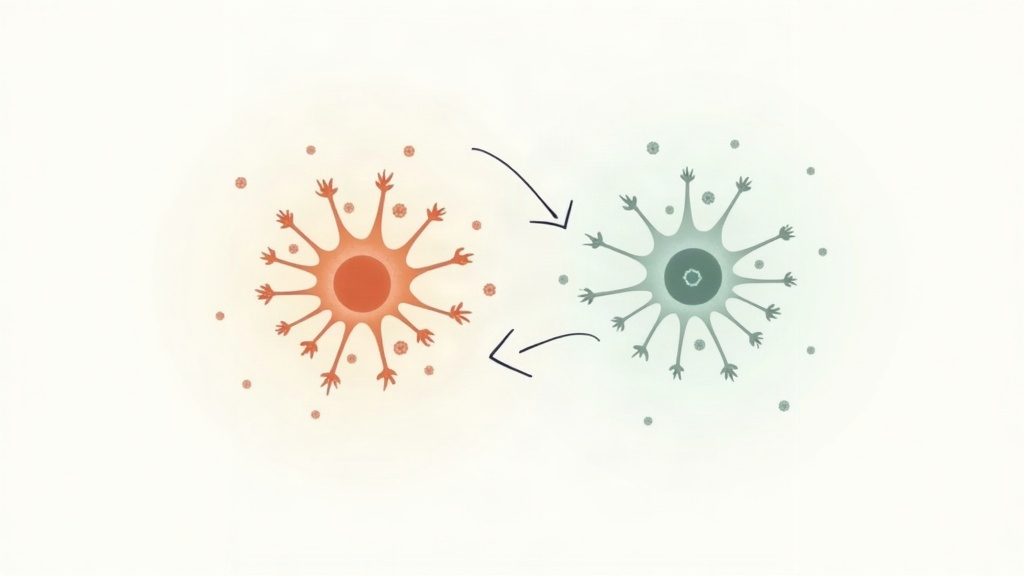
Immunomodulation Is Not Immunosuppression
Immunosuppressants blunt the immune system across the board. That is why people on biologics are screened for tuberculosis and told to avoid live vaccines. GLP-1 drugs work differently. GLP-1 receptors sit on some immune cells, and activating them dampens certain inflammatory signals, while weight loss shrinks the visceral fat that pumps out TNF-alpha and IL-6. The net effect is a quieter immune system, not a weaker one.
The other side of modulation is the safety signal covered in our pillar guide. In a 2025 TriNetX study of people with type 2 diabetes, 290,770 GLP-1 users were matched against the same number of DPP-4 inhibitor users (Lee et al., Journal of Autoimmunity, 2025). GLP-1 users had higher rates of new autoimmune thyroiditis (HR 1.30), ankylosing spondylitis (HR 1.30), psoriasis (HR 1.17), ulcerative colitis (HR 1.11) and rheumatoid arthritis (HR 1.08). Detection bias and confounding could explain part of this. It also shows that a drug which shifts immune balance can shift it in more than one direction.
What We Do Not Know: GLP-1 Plus Immunosuppressants
The infection trials mostly enrolled people with diabetes or obesity, not people on biologics or JAK inhibitors. No published study has looked specifically at infection risk when a GLP-1 drug is added to an immunosuppressant. Observational cohorts in people with immune-mediated diseases look reassuring on other outcomes: a 2026 OneFlorida+ analysis of 13,204 matched pairs with obesity and autoimmune disease linked GLP-1 use to lower mortality (HR 0.56) and fewer blood clots (Dai et al., Journal of the American Heart Association, 2026). Infection risk in that combination is still an open question, so keep up with the vaccines and infection screening your rheumatologist recommends.
Condition Evidence: What Has Changed Since 2025
The pillar article grades each condition. The table below adds what has been published or presented since then, with the grade for full-dose use in people with excess weight.
| Condition | Best evidence so far | Grade |
|---|---|---|
| Psoriasis | TOGETHER-PsO phase 3b (tirzepatide + ixekizumab), small semaglutide RCT | B |
| Psoriatic arthritis | TOGETHER-PsA phase 3b (tirzepatide + ixekizumab) | B |
| Rheumatoid arthritis | Retrospective cohorts (disease activity, mortality) | C |
| Crohn's and UC | Systematic review of mostly observational data | C |
| Ankylosing spondylitis | No trials; one incidence signal | C (caution) |
| Hashimoto's | No trials; one incidence signal | C (caution) |
No condition reaches Grade A, and no grade applies to microdoses.
Psoriasis and Psoriatic Arthritis (Grade B)
GLP-1 psoriasis data took a real step forward in 2026. Lilly's TOGETHER-PsO trial randomized 274 adults with moderate to severe plaque psoriasis and obesity or overweight (mean BMI 39.2) to ixekizumab (Taltz) plus tirzepatide or ixekizumab alone (Lebwohl et al., JAMA Dermatology, 2026). At week 36, 27.1% of the combination group reached complete skin clearance (PASI 100) plus at least 10% weight loss, compared with 5.8% on ixekizumab alone. Looking at skin alone, PASI 100 was 40.6% versus 29%.
The sister trial, TOGETHER-PsA, showed a bigger gap for joints. Lilly reported in August 2026 that 43.7% of the combination group reached ACR50 at 52 weeks, compared with 15.7% on ixekizumab alone. Both trials were open-label and sponsored by the manufacturer, so treat the size of the effect with some caution.
The earlier semaglutide data are smaller. In an open-label trial of 31 people with psoriasis, obesity and type 2 diabetes, semaglutide 1 mg weekly cut median PASI from 21 to 10 over 12 weeks, while controls went from about 21 to 16 (Petković-Dabić et al., Biomolecules, 2025). CRP halved in the semaglutide group.
Notice what these trials share: full doses, people with obesity, and in TOGETHER, a biologic doing the heavy lifting. They support adding a GLP-1 drug to proper psoriasis treatment when weight is part of the problem. They say nothing about microdosing in a lean person. For diet and supplement approaches that work alongside either, see our psoriasis diet guide and psoriasis supplements.
Rheumatoid Arthritis (Grade C)
The RA data are encouraging but observational. A US chart review followed 173 people with RA and a BMI of 27 or more who took semaglutide or tirzepatide, against 42 who were prescribed one but never took it (Kellner et al., ACR Open Rheumatology, 2025). The treated group saw larger drops in RA disease activity, pain and weight, with lower ESR and CRP. Nearly a third stopped the drug during the year, mostly because of GI side effects.
A 2026 TriNetX analysis of 4,607 matched pairs with RA and type 2 diabetes found 32% lower all-cause mortality with GLP-1 drugs than with DPP-4 inhibitors (Yu et al., Journal of Diabetes Investigation, 2026). Mortality is not disease activity, but it matters in a condition that raises cardiovascular risk. Our rheumatoid arthritis supplements guide covers the omega-3 and curcumin evidence that pairs with these drugs.
Crohn's and Ulcerative Colitis (Grade C)
A 2026 systematic review in Autoimmunity Reviews collected 33 studies of GLP-1 drugs in immune-mediated diseases, 20 of them in IBD (Birda et al., 2026). The authors found better outcomes in several studies, including less steroid use and fewer hospitalizations and surgeries, but too much overlap between insurance databases to pool the numbers. GI side effects were more common in GLP-1 users, though mostly not severe.
For IBD the practical concern is the gut itself. Slowed stomach emptying, nausea and constipation can mimic a flare, and people with stricturing Crohn's disease have a real reason to worry about obstruction. Our Crohn's supplements guide covers the nutrient gaps that can widen when appetite drops.
Ankylosing Spondylitis (Grade C, Caution)
Searches for "GLP-1 ankylosing spondylitis" have climbed, but the evidence has not. No trial has tested a GLP-1 drug in AS. The only large dataset points the other way: the 2025 TriNetX study found 30% more new AS diagnoses in GLP-1 users with diabetes (HR 1.30, 95% CI 1.13 to 1.51). That figure may reflect closer medical follow-up rather than causation. For AS, the foundation remains exercise, physical therapy and established medication, covered in our ankylosing spondylitis natural treatment guide. Losing excess weight may still ease load on the spine and hips.
Hashimoto's (Grade C, Caution)
Hashimoto's carries the same kind of incidence signal (HR 1.30 for new autoimmune thyroiditis) and no trial data on TPO antibodies. The practical issue is levothyroxine. Oral semaglutide raised thyroxine exposure in label studies, and slower stomach emptying can change how any oral pill absorbs. If you are on thyroid hormone, ask for a TSH check 6 to 8 weeks after starting or changing a GLP-1 dose. Our Hashimoto's weight gain guide and thyroid antibodies guide cover the rest.
Tirzepatide vs Semaglutide for Autoimmune Disease
Tirzepatide (Mounjaro, Zepbound) activates two receptors, GLP-1 and GIP. Semaglutide (Ozempic, Wegovy, Rybelsus) activates GLP-1 only. Nobody has compared them head to head for an autoimmune outcome, so any choice rests on indirect evidence.
| Factor | Semaglutide | Tirzepatide |
|---|---|---|
| Weight loss, head to head (SURMOUNT-5, 72 weeks) | 13.7% | 20.2% |
| Autoimmune trial data | Small psoriasis RCT; IBD and RA cohorts | Phase 3b in psoriasis and psoriatic arthritis (with ixekizumab) |
| Oral option | Rybelsus (diabetes), Wegovy pill (obesity) | None; Lilly's oral GLP-1 is orforglipron (Foundayo) |
| Label note that affects autoimmune patients | Oral form raises levothyroxine exposure | Reduces oral contraceptive reliability after starting and each dose increase |
SURMOUNT-5 randomized 751 adults with obesity but without diabetes and found tirzepatide produced more weight loss and larger waist reductions than semaglutide (Aronne et al., New England Journal of Medicine, 2025). Since weight loss appears to drive much of the anti-inflammatory effect, tirzepatide has a plausible edge for people whose inflammation is tied to excess weight. It also has the only phase 3b autoimmune data, through TOGETHER.
Semaglutide has more years of real-world use and more observational data in IBD, and it comes as a pill. If one drug gives you constant nausea, the other may suit you better; tolerance differs from person to person.
Side Effects That Matter More When You Have an Autoimmune Disease
GLP-1 Safety Checklist for Autoimmune Patients
Print this or screenshot it for your next appointment. It does not replace your prescriber's judgment.
Before you start
Bring these to the appointment so your prescriber can judge fit and set a baseline.
- Current disease activity: are you stable or mid-flare? Starting a new drug during a flare muddies the picture.
- Baseline labs: hs-CRP, ESR, HbA1c, lipids, and your condition-specific markers (TSH and thyroid antibodies, PASI score, CDAI or DAS28, fecal calprotectin).
- Personal or family history of medullary thyroid cancer or MEN2 (boxed warning: do not use).
- History of pancreatitis, gallstones, gastroparesis, or bowel strictures (common in Crohn's).
- History of disordered eating, and pregnancy plans (stop at least 2 months before trying to conceive for semaglutide).
Medications to review together
GLP-1 drugs slow stomach emptying, which can change how oral medicines absorb.
- Insulin or sulfonylureas: higher risk of low blood sugar; doses may need lowering.
- Levothyroxine: oral semaglutide raised thyroxine exposure in label studies. Recheck TSH 6 to 8 weeks after starting or changing dose.
- Oral birth control with tirzepatide: label advises a non-oral or backup method for 4 weeks after starting and after each dose increase.
- Methotrexate, steroids, biologics, JAK inhibitors: no known direct interaction, but tell every specialist you are starting a GLP-1.
- Narrow-window oral drugs (warfarin, some seizure medicines): ask whether extra monitoring is needed.
Stop and call your doctor the same day
These are rare, but they are the reason supervision matters.
- Severe abdominal pain that bores through to the back, with or without vomiting (possible pancreatitis).
- Pain under the right ribs, fever, or yellowing skin or eyes (possible gallbladder disease).
- Vomiting that keeps you from holding down fluids, dizziness on standing, or very dark urine (dehydration, kidney strain).
- Bloating with no bowel movement or gas for more than a day (possible obstruction).
Track every 3 months
This is how you learn whether the drug is doing anything for your autoimmune disease.
- The same condition-specific markers you measured at baseline.
- Protein intake (aim for the target your clinician sets) and two or more strength sessions a week to protect muscle.
- Any new joint pain, rash, eye inflammation, bowel change, or thyroid symptoms. Report them rather than writing them off as side effects.
- Tell your surgeon and anesthesiologist about GLP-1 use before any procedure or endoscopy.
Nausea, Vomiting and Gastroparesis
GI effects are the most common reason people stop. In STEP 1, nausea and diarrhea were the most frequent side effects of semaglutide 2.4 mg, and 4.5% of participants quit because of GI events, compared with 0.8% on placebo (Wilding et al., New England Journal of Medicine, 2021). These usually peak during dose increases and fade.
Rarer GI problems need more attention. A claims analysis comparing GLP-1 users with people on bupropion-naltrexone found higher risks of pancreatitis (HR 9.09), bowel obstruction (HR 4.22) and gastroparesis (HR 3.67), with wide confidence intervals because the events were uncommon (Sodhi et al., JAMA, 2023). For someone with Crohn's disease, prior bowel surgery or existing slow motility, that matters more than it does for the average patient.
Lower doses probably do reduce GI side effects. That is the one microdosing claim with a sensible basis, and it is also exactly what slow titration under a prescriber is designed to achieve.
Muscle Loss
Weight lost on GLP-1 drugs includes muscle. In a DXA substudy of SURMOUNT-1, about 75% of the weight lost on tirzepatide was fat and 25% was lean mass, the same split seen on placebo (Look et al., Diabetes, Obesity and Metabolism, 2025). That proportion is typical of any diet-driven weight loss, but people with RA, lupus or long-term steroid use often start with less muscle to spare. Inflammatory disease itself speeds muscle loss. Protein at every meal and two or more strength sessions a week are the practical defense.
Pancreatitis, Gallbladder and Thyroid Warnings
GLP-1 labels warn about acute pancreatitis and gallbladder disease, and rapid weight loss raises gallstone risk on its own. All injectable GLP-1 drugs carry a boxed warning against use in people with a personal or family history of medullary thyroid carcinoma or MEN2. This warning concerns C-cells, not the follicular cells attacked in Hashimoto's, but your endocrinologist should know your family history.
Nutrient Gaps and Procedures
Eating much less can open gaps in protein, iron, B12, magnesium and vitamin D, all of which autoimmune patients already run low on. Our best supplements for autoimmune disease guide lists the foundation. Because GLP-1 drugs slow stomach emptying, tell your surgeon, gastroenterologist and anesthesiologist before any procedure or endoscopy.
Compounding, Legality and Insurance in 2026
Compounded GLP-1s
The compounding boom rested on shortages that have ended. Tirzepatide came off the FDA shortage list in December 2024 and semaglutide in February 2025, which removed the basis for routine copies. Pharmacies can still compound a version for a documented, patient-specific need, but mass-marketed copies are no longer allowed.
Enforcement has tightened through 2026. The FDA sent warning letters to dozens of companies over misleading claims about compounded GLP-1s. On April 30, 2026, it proposed excluding semaglutide, tirzepatide and liraglutide from the 503B bulks list that governs large outsourcing facilities. It is a proposal, not a final rule, so check the FDA's site for its current status. Pharmacies that compound for individual patients (503A) are not directly affected by the proposal, but semaglutide and tirzepatide are no longer on the shortage list, which limits what they can lawfully copy.
Microdosing and compounding are tangled together, because multidose compounded vials make fractional doses easy to draw. That is also where the risk sits. Stanford Medicine noted in July 2026 that the FDA has flagged cases of patients injecting 10 to 20 times their intended dose from compounded vials, along with unapproved salt forms and untested add-ins such as B12. Under the Cedars-Sinai specialists' framing, risk is highest for people using GLP-1s without a clinical indication, from compounded sources, without supervision. A person microdosing for inflammation often checks all three boxes.
Will Insurance Cover GLP-1 for Inflammation?
No GLP-1 drug is FDA-approved for psoriasis, RA, AS, IBD or any other autoimmune disease. Insurers will not cover one "for inflammation." Coverage runs through approved indications: type 2 diabetes, obesity, cardiovascular risk reduction, obstructive sleep apnea and fatty liver disease, depending on the product.
What that looks like in practice:
- Medicare. Since July 1, 2026, the temporary Medicare GLP-1 Bridge has offered a $50 monthly copay for Wegovy (injection or pill), Foundayo, and the Zepbound KwikPen to Part D enrollees who meet obesity criteria (for example, BMI 35 or higher, or BMI 27 or higher with prediabetes or prior heart attack or stroke). It runs through December 31, 2027 and requires prior authorization.
- Employer plans. A Business Group on Health survey of 127 large employers found 60% covered GLP-1s for obesity in 2026, down from 72% in 2025, and 14% have dropped or plan to drop coverage by 2027.
- Self-pay. Manufacturers now sell direct. Lilly's oral GLP-1, Foundayo (orforglipron), was approved on April 1, 2026, with self-pay prices starting around $149 a month at the lowest dose. Check current prices with the manufacturer, since they have shifted repeatedly.
If you have an autoimmune disease and also meet criteria for diabetes or obesity coverage, that is the legitimate route, and the inflammation effect becomes a possible bonus. Ask your prescriber to document every qualifying condition.
How to Talk to Your Doctor About Low Dose GLP-1
Doctors respond better to a clear question than to a request for a trend. Some ways to frame it:
- Lead with your other indications. "I have psoriatic arthritis and a BMI of 33 with prediabetes. Would a GLP-1 make sense for the weight, and could it help my joints?" That is an evidence-backed request.
- Ask about tolerance, not microdosing. "If side effects are a problem, can we titrate slowly or stay at a lower maintenance dose?" Prescribers do this routinely.
- Bring baseline numbers. CRP, ESR and your condition-specific scores let you both judge whether the drug is doing anything after 3 to 6 months.
- Name every medication. Levothyroxine, oral contraceptives, insulin, methotrexate, biologics. Your rheumatologist, dermatologist or gastroenterologist should each know.
- Agree on what success looks like. For example, a 5% weight loss plus a drop in PASI or DAS28 by the first follow-up. If neither moves, the drug is not earning its place.
Do not reduce or stop your biologic, methotrexate or other autoimmune medication because inflammation markers fall on a GLP-1 drug. Those decisions belong to your specialist, based on disease activity rather than CRP alone.
If cost or side effects rule GLP-1s out, low dose naltrexone is the other repurposed drug autoimmune patients ask about. It works through a different pathway, has small direct trials in Crohn's disease and fibromyalgia, and costs far less. The two are not interchangeable, and nobody has studied them together.
Frequently Asked Questions
Does low dose GLP-1 reduce inflammation?
No trial has shown it. The anti-inflammatory evidence comes from full approved doses, usually in people with obesity or diabetes. A matched Epic Research analysis found that CRP and ESR changes on semaglutide and liraglutide were not significant once weight loss was accounted for, which suggests small doses that do not change weight may do little for inflammation.
Does GLP-1 lower your immune system?
No. A 2025 meta-analysis of 136 randomized trials found 11% fewer serious infections in GLP-1 users. These drugs modulate inflammation rather than suppress immunity. Evidence specifically in people also taking biologics or JAK inhibitors is limited, so keep up with the vaccines and screening your specialist recommends.
Is tirzepatide better than semaglutide for autoimmune disease?
Unknown. No head-to-head autoimmune trial exists. Tirzepatide causes more weight loss (20.2% vs 13.7% in SURMOUNT-5) and has phase 3b psoriatic disease data. Semaglutide has more observational IBD and RA data and an oral form. The choice depends on your goals, tolerance and coverage.
Can GLP-1 drugs help ankylosing spondylitis?
There are no AS trials. One large study in people with diabetes saw more new AS diagnoses among GLP-1 users (HR 1.30), which may reflect detection bias. Weight loss can still ease joint load. Exercise and established AS treatment remain the foundation.
Will insurance cover GLP-1 for inflammation?
Not for inflammation alone. Coverage depends on an approved indication such as type 2 diabetes, obesity, cardiovascular risk, sleep apnea or fatty liver disease. Medicare's Bridge program offers a $50 copay for eligible obesity patients through 2027.
Is microdosing GLP-1 safe?
It has never been formally studied. Smaller doses likely mean fewer GI effects, but self-measuring from vials, reusing single-dose vials and buying compounded or gray-market products all raise the risk of dosing errors. Change doses only with a prescriber.
The honest summary: GLP-1 drugs at full dose help some autoimmune patients who also carry excess weight, most clearly in psoriatic disease. Low dose GLP-1 for inflammation is a hypothesis that nobody has tested, sold with a confidence the data do not support. If you are weighing it, the better question is whether you have a reason for a full, supervised course.
Take the free 3-minute AutoimmuneFinder quiz to find your personalized protocol, with every intervention evidence-graded and matched to your condition, severity and current medications.
References
- Han S, Liu Y, Xing B, et al. (2025). Association of glucagon-like peptide-1 receptor agonist use with risk of infections: a systematic review and meta-analysis. Journal of Infection, 91(5), 106645.
- Lee YJ, Fang YW, Chen MT, et al. (2025). Association between autoimmune diseases and glucagon-like peptide-1 receptor agonists: a real-world evidence study. Journal of Autoimmunity, 155, 103453.
- Birda CL, Ibrahim F, Chatterjee A, et al. (2026). Impact of GLP-1 analogues on immune-mediated inflammatory diseases: a systematic review. Autoimmunity Reviews, 25(1), 103936.
- Petković-Dabić J, Binić I, Carić B, et al. (2025). Effects of semaglutide treatment on psoriatic lesions in obese patients with type 2 diabetes mellitus: an open-label, randomized clinical trial. Biomolecules, 15(1), 46.
- Lebwohl M, et al. (2026). TOGETHER-PsO: ixekizumab plus tirzepatide in psoriasis with obesity. JAMA Dermatology. Results as reported by Healio (May 2026) and Eli Lilly (August 2026).
- Kellner DA, Dente E, Tran V, et al. (2025). Effect of glucagon-like peptide 1 receptor agonists on patients with rheumatoid arthritis. ACR Open Rheumatology, 7(9), e70103.
- Yu YT, Lee YC, et al. (2026). Association of GLP-1 receptor agonist use with clinical outcomes in patients with rheumatoid arthritis and type 2 diabetes. Journal of Diabetes Investigation, 17(5), 766-780.
- Dai H, Lee YA, et al. (2026). GLP-1 receptor agonists and cardiovascular events in adults with obesity and autoimmune disease: a target trial emulation. Journal of the American Heart Association, 15(15), e047893.
- Aronne LJ, Horn DB, le Roux CW, et al. (2025). Tirzepatide as compared with semaglutide for the treatment of obesity (SURMOUNT-5). New England Journal of Medicine, 393(1), 26-36.
- Wilding JPH, Batterham RL, Calanna S, et al. (2021). Once-weekly semaglutide in adults with overweight or obesity (STEP 1). New England Journal of Medicine, 384(11), 989-1002.
- Look M, Dunn JP, Kushner RF, et al. (2025). Body composition changes during weight reduction with tirzepatide in the SURMOUNT-1 study. Diabetes, Obesity and Metabolism, 27(5), 2720-2729.
- Sodhi M, Rezaeianzadeh R, Kezouh A, Etminan M. (2023). Risk of gastrointestinal adverse events associated with glucagon-like peptide-1 receptor agonists for weight loss. JAMA, 330(18), 1795-1797.
- Epic Research (2024). No significant change in inflammatory markers associated with GLP-1 medications. epicresearch.org.
- Cedars-Sinai (2026). Can microdosing GLP-1s promote health and weight loss? Stanford Medicine (2026). Compounded GLP-1s: why doctors worry and the FDA is cracking down.
- Medicare.gov (2026). Weight loss drugs: Medicare GLP-1 Bridge. Business Group on Health employer survey, as reported by SHRM (September 2026).
This site provides educational information only. Not medical advice. Always consult your healthcare provider before changing your treatment plan. GLP-1 receptor agonists are prescription medications; do not start, stop or adjust them, or any autoimmune medication, without your prescriber.