Key takeaways
The 30-second version
- No clinical trial has tested the carnivore diet in autoimmune disease. The best data is a 2021 online survey of 2,029 people who already loved the diet.
- In that survey, most people with an autoimmune condition said it got better. Nobody checked their labs, and people who felt worse had likely quit before answering.
- People often do feel better because carnivore removes every possible food trigger, cuts junk food and usually causes weight loss. You can get most of those effects with less risk.
- The real risks: almost zero fiber for your gut bacteria, LDL cholesterol that often rises, gout flares, and gaps in vitamin C, magnesium, calcium and folate.
- If you try it, keep it to 2 to 6 weeks as an elimination test, get labs first, plan your reintroduction, and talk to your doctor. Never stop prescribed medication on your own.
Want a version built around your symptoms and labs?
Take the 3-min quiz →The carnivore diet has no randomized controlled trial in any autoimmune disease. The evidence for the carnivore diet in autoimmune conditions rests on one self-report survey, a handful of case reports, and indirect data from ketogenic diet research. Lennerz et al. (2021, Current Developments in Nutrition) surveyed 2,029 adults who had eaten a carnivore diet for at least six months. Among the 369 respondents with an autoimmune condition, 36% reported it resolved and 53% reported improvement. That is a striking number from a weak design. On our A/B/C scale, carnivore earns Grade C for autoimmune disease, below the Grade B of the AIP diet.
This review covers what the studies show, why people genuinely feel better, what the diet costs your gut and your blood work, who might reasonably test it for a few weeks, and how it compares with AIP line by line. For the wider landscape of seven autoimmune diets, see our autoimmune diet comparison. Discuss any major diet change with your doctor, especially if you take immunosuppressants, thyroid hormone, diabetes or blood-thinning medication.
What Is the Carnivore Diet (and the Lion Diet)?
A carnivore diet is a meat diet for autoimmune disease taken to its limit: animal foods only. Beef, lamb, pork, poultry, fish, organ meat, animal fat and usually eggs. Some versions keep hard cheese, butter or cream. Vegetables, fruit, grains, legumes, nuts, seeds, coffee and most seasonings are gone. Carbohydrate intake falls close to zero, so most people enter nutritional ketosis.
The lion diet is the strictest variant. Ruminant meat (beef, lamb, goat, venison), salt and water. Nothing else. Mikhaila Peterson popularized it after describing relief from juvenile rheumatoid arthritis, which she was diagnosed with as a child. Her story drives much of the online interest in "carnivore diet autoimmune" searches. It is a personal account, and no study has tested it.
Advocates frame plants as the problem: lectins, oxalates, salicylates, phytates and other compounds that may irritate a damaged gut. Some people do react to specific plant foods. The leap from "some people react to some plants" to "everyone with autoimmunity should eat no plants" is where the evidence runs out.
Does the Carnivore Diet Help Autoimmune Disease? What the Studies Show
Three bodies of evidence exist. They differ sharply in quality.
The Lennerz 2021 survey of 2,029 adults
The single most-cited carnivore diet autoimmune study is a cross-sectional survey by Belinda Lennerz, David Ludwig and colleagues at Boston Children's Hospital. It ran on social media from March to June 2020 and recruited adults who self-identified as eating a carnivore diet for six months or longer. The final sample was 2,029 people, median age 44, two thirds male.
Respondents reported remarkable results. 95% said their overall health improved. Median BMI fell from 27.2 to 24.3. By condition, among those who reported each one:
| Self-reported condition | Respondents | Resolved | Improved |
|---|---|---|---|
| Autoimmune | 369 | 36% | 53% |
| Gastrointestinal | 531 | 59% | 38% |
| Dermatologic | 690 | 44% | 48% |
| Musculoskeletal | 502 | 42% | 54% |
New or worsening side effects were uncommon: diarrhea 5.5%, muscle cramps 4.0%, constipation 3.1%, hair thinning 1.9%. The lipid data told a different story. Among respondents who reported lipids, median LDL cholesterol was 172 mg/dL on the diet versus 126 mg/dL before it (medians from overlapping but not identical groups), while HDL was higher and triglycerides lower.
The authors listed the limits themselves. Every number was self-reported, including diagnoses and pre-diet labs. No nutrient or biomarker was measured. People who disliked the diet, had side effects or quit were very unlikely to find and complete the survey. Online carnivore communities may over-report adherence and benefit. The paper states that the generalizability of the findings is unknown.
Case reports and the 10-patient IBD series
The strongest clinical data in a single autoimmune condition is a 2024 case series by Nicholas Norwitz and Adrian Soto-Mota in Frontiers in Nutrition. Ten people with biopsy-confirmed IBD (six ulcerative colitis, four Crohn's) were recruited through social media because they had already responded to a carnivore or carnivore-ketogenic diet. All ten improved on the IBD Questionnaire, with before-diet scores reported retrospectively. Inclusion also required that each patient was off IBD medication or had stopped it on the diet. That is a feature of how cases were selected, not a recommendation: stopping IBD medication on your own risks severe flares and complications.
The design selects for success by construction. Patients were included because the diet had worked for them. There is no denominator: we do not know how many people with IBD tried the same diet and got worse. The paper is useful as a signal that a subgroup of IBD patients may respond, and as a reason to run a proper trial. It does not establish efficacy. Other published carnivore and "paleolithic ketogenic" case reports share the same limits.
Borrowed evidence: what ketogenic diet research shows
Because carnivore is almost always ketogenic, some of its effects may come from ketosis rather than from the absence of plants. That research is better developed.
- Gut immune cells. Ang et al. (2020, Cell) ran an 8-week inpatient study and matching mouse experiments. Ketogenic diets shifted the gut microbiome differently from ordinary high-fat diets, lowered bifidobacteria, and reduced intestinal Th17 cells, a pro-inflammatory T cell subset implicated in many autoimmune diseases.
- Inflammasome. Youm et al. (2015, Nature Medicine) showed the ketone body beta-hydroxybutyrate blocks the NLRP3 inflammasome, a key driver of IL-1 beta release, in mouse models.
- Multiple sclerosis. Brenton et al. (2022, Journal of Neurology, Neurosurgery and Psychiatry) put 65 people with relapsing MS on a modified Atkins ketogenic diet for six months. 83% adhered. Fatigue and depression scores fell by nearly half, EDSS disability scores improved from 2.3 to 1.9, and nobody relapsed. There was no control group, constipation affected 43%, and 27% of women reported menstrual irregularities.
None of these used a carnivore diet. A ketogenic diet can include plenty of non-starchy vegetables, olive oil, nuts and avocado. If ketosis is the active ingredient, you can get it without giving up fiber.
What does not exist yet
There is no randomized controlled trial of a carnivore diet in Hashimoto's, rheumatoid arthritis, psoriasis, lupus, IBD or any other autoimmune condition. There are no long-term safety data in autoimmune patients. Our grading reflects that.
Multiple RCTs or meta-analyses
No autoimmune diet reaches this level for carnivore. Mediterranean comes closest overall.
Single trial, case series or strong mechanism plus clinical data
AIP (Konijeti 2017, Abbott 2019). Ketogenic diet in relapsing MS (Brenton 2022).
Preliminary, survey or mechanistic only
Carnivore and lion diet for autoimmune disease (Lennerz 2021 survey, Norwitz 2024 case series).
Why People Report Improvement on a Meat-Only Diet
The testimonials are real experiences. Several known mechanisms explain them, and most do not depend on eating only meat.
The elimination effect. Carnivore is the most complete elimination diet possible. If gluten, dairy, nightshades, eggs or a high-FODMAP food is your trigger, it disappears on day one. The diet works as a blunt instrument: it removes the trigger along with hundreds of foods that were never a problem. Structured protocols such as AIP aim at the same target with less collateral loss. See the gluten and joint inflammation guide for one common trigger.
Ultra-processed food is gone. Packaged snacks, sweetened drinks, refined flour, seed-oil fried food, alcohol and additive-heavy products all vanish. Many people improve simply because their previous diet was poor.
Weight loss. The Lennerz respondents lost about three BMI points at the median. Fat tissue secretes inflammatory cytokines, and losing weight lowers that signal.
Less fermentable material in the colon. In IBD and IBS-type symptoms, removing fiber and fermentable carbohydrates reduces gas, bloating, urgency and stool volume quickly. That can feel like healing even when mucosal inflammation is unchanged. Symptom relief and fecal calprotectin are different measurements.
Ketosis and steadier blood sugar. Covered above. Real, plausible, and achievable without zero plants.
Expectation and community. People who start carnivore usually do so after watching dramatic stories and join communities that celebrate results. Expectation shapes how symptoms are reported, particularly fatigue and pain.
The Real Risks of the Carnivore Diet
These are the trade-offs a responsible trial has to plan around.
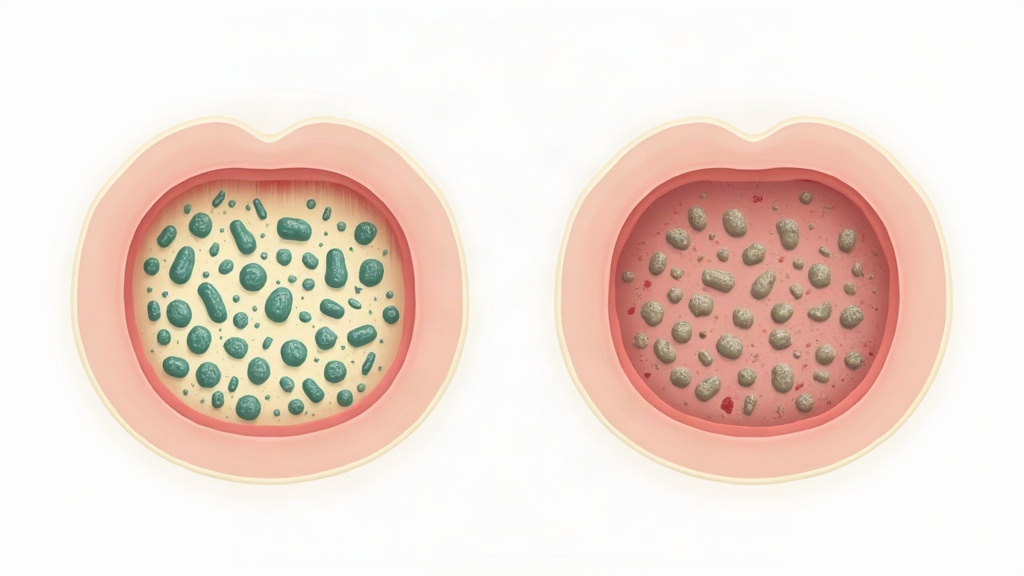
Fiber, the microbiome and short-chain fatty acids
Gut bacteria ferment dietary fiber into short-chain fatty acids, mainly butyrate, propionate and acetate. Butyrate feeds the cells lining the colon and does something directly relevant to autoimmunity: in Furusawa et al. (2013, Nature), butyrate drove the development of colonic regulatory T cells, the immune cells that restrain autoimmune attack, and reduced colitis in mice.
The carnivore diet removes nearly all of that fuel. David et al. (2014, Nature) fed ten volunteers an entirely animal-based diet for five days. Within that time, fiber-fermenting species such as Roseburia, Eubacterium rectale and Ruminococcus bromii fell, bile-tolerant species such as Bilophila wadsworthia and Alistipes rose, carbohydrate fermentation products dropped, protein fermentation products increased, and fecal deoxycholic acid (a secondary bile acid linked to inflammation and liver cancer in mice) went up. The authors noted that Bilophila has been linked to inflammatory bowel disease in mouse studies.
Five days is short, and the community structure returned to baseline within about two days of the volunteers resuming normal food. Nobody has measured what years of carnivore eating do to the microbiome of a person with autoimmune disease. Given that we spend considerable effort in other articles on feeding butyrate producers, as covered in our probiotics for autoimmune disease guide, the direction of change is a concern.
LDL cholesterol
In the Lennerz survey, median reported LDL was 172 mg/dL on the diet versus 126 mg/dL before it, a difference of about 46 mg/dL. Some lean, active carnivore eaters see far larger rises. HDL and triglycerides often improve, and how to weigh that mix is debated. What is not debated: several autoimmune diseases, including rheumatoid arthritis, lupus and psoriasis, already carry elevated cardiovascular risk. A large LDL or ApoB jump in that context deserves a real conversation with your doctor.
Gout and uric acid
Choi et al. (2004, New England Journal of Medicine) followed 47,150 men for 12 years. The highest meat-intake group had a 41% higher risk of gout than the lowest (relative risk 1.41), and seafood carried a 51% higher risk. Dairy was protective. Ketogenic-style eating can also shift uric acid levels, which is one reason to check it before and during any trial. If you have had gout or uric acid stones, carnivore is a poor choice.
Nutrient gaps
Goedeke et al. (2024, Nutrients) modelled four carnivore meal plans against Australian and New Zealand reference values. Every plan fell short on thiamin, magnesium, calcium and vitamin C. Some also fell short on iron, folate, iodine and potassium. Fiber was far below recommendations and sodium exceeded the upper threshold. Riboflavin, niacin, zinc, B6, B12, selenium and vitamin A were adequate. This was a modelling study, not measured blood levels, and whether ketosis lowers some requirements (vitamin C is the usual argument) is unresolved.
Found only in plants. A meat-only diet supplies essentially none.
Cover it: No animal source. This is the main reason to keep a carnivore phase short.
Lab: None; track stool pattern
Muscle meat contains very little. Fell short in every modelled plan (Goedeke 2024).
Cover it: Fresh (lightly cooked) liver supplies some. Many people need a supplement during the trial.
Lab: Plasma vitamin C
Mostly from leafy greens, nuts, seeds and legumes.
Cover it: Fish and shellfish help a little. Magnesium glycinate is the usual fix.
Lab: RBC magnesium
Beef and lamb are modest sources. Short in the modelled plans.
Cover it: Pork and fish are richer (excluded on the lion diet).
Lab: Whole-blood thiamin if symptoms
Without dairy or edible fish bones, intake drops sharply.
Cover it: Canned sardines or salmon with bones; hard cheese if tolerated.
Lab: No good blood marker; review diet
Concentrated in leaves and legumes. Short in some plans.
Cover it: Liver and eggs. Matters more if you take methotrexate.
Lab: Serum or RBC folate, homocysteine
Depends on seafood, eggs, dairy and iodized salt.
Cover it: Some seafood and eggs. Do not add high-dose iodine with Hashimoto's without your doctor.
Lab: TSH, free T4 (thyroid status)
Fruit, vegetables and tubers are the main sources.
Cover it: Meat and fish supply some. Ask before supplementing if you have kidney disease or take blood-pressure drugs.
Lab: Serum potassium (basic metabolic panel)
Safety labs before you start and again at 4 to 6 weeks
- Lipid panel plus ApoB (LDL often rises)
- Uric acid (gout risk)
- Creatinine, eGFR and urine albumin (kidney load)
- hs-CRP and your condition marker (TPO antibodies, calprotectin, etc.)
- Fasting glucose or HbA1c if you take diabetes medication
Shortfalls based on Goedeke et al. 2024 (Nutrients), a modelling study of four carnivore meal plans against Australian and New Zealand reference values. Discuss any supplement with your doctor, especially if you take thyroid, kidney or blood-pressure medication.
Folate deserves a specific mention for anyone on methotrexate for RA or psoriasis, because folate supplementation is part of standard methotrexate safety. Magnesium matters across the board, and our best supplements for autoimmune disease guide covers forms and doses.
Kidneys
A meat-only diet is high in protein, and protein raises the filtration load on the kidney. Healthy kidneys handle this. Damaged kidneys may not: the KDOQI 2020 nutrition guideline recommends, under close supervision, low protein intake (0.55 to 0.60 g/kg/day) for metabolically stable adults with stage 3 to 5 non-diabetic chronic kidney disease, the opposite of carnivore. Lupus nephritis, IgA nephropathy and long-term NSAID use all raise kidney risk in autoimmune patients. Check creatinine, eGFR and urine albumin before starting.
Medications and other concerns
Some interactions are predictable and serious enough to plan for:
- SGLT2 inhibitors (empagliflozin, dapagliflozin) are a combination to discuss with your doctor before going very low carbohydrate, because ketoacidosis is a known risk with this drug class.
- Insulin and sulfonylureas can cause low blood sugar when carbohydrate drops to near zero.
- Warfarin: big changes in vitamin K intake can affect your INR, so tell your anticoagulation clinic before changing your diet.
- Levothyroxine: no direct interaction, but weight loss and very low carbohydrate intake can change thyroid hormone needs. Recheck TSH and free T4 at 6 to 8 weeks.
- Immunosuppressants and biologics: keep taking them. Diet is an adjunct.
Constipation is common in the first weeks. In the MS ketogenic trial, 43% had it. Menstrual irregularities were reported by 27% of women in that trial. For people with any history of disordered eating, a diet this restrictive is a known risk and should be avoided.
AIP vs Carnivore Diet: A Structured Comparison
AIP and carnivore share a premise: remove foods that might provoke the immune system, then see what changes. They differ in how much they remove, what evidence supports them, and whether reintroduction is part of the design.
| Dimension | AIP (Autoimmune Protocol) | Carnivore |
|---|---|---|
| What you remove | Grains, legumes, dairy, eggs, nightshades, nuts, seeds, coffee, alcohol, refined sugar, additives | Every plant food. Strict versions also drop dairy, eggs and pork (the "lion diet" keeps only ruminant meat, salt and water) |
| What you keep | Meat, fish, organ meat, most vegetables, fruit, tubers, coconut, olive oil, fermented vegetables | Meat, fish, organ meat, animal fat; eggs and hard cheese in looser versions |
| Best published evidence | Two uncontrolled pilot trials with objective measures: Konijeti 2017 (IBD, 11 of 15 in clinical remission at week 6); Abbott 2019 (Hashimoto's, symptom score 92 to 29, hs-CRP down 29%) | One self-report survey (Lennerz 2021, 2,029 adults) and a 10-patient IBD case series (Norwitz 2024). No trial of any design in autoimmune disease |
| Evidence grade for autoimmune disease | Grade B | Grade C |
| Fiber per day | Moderate to high (vegetables, fruit, tubers) | Close to zero |
| Effect on gut microbiome | Keeps fiber-fermenting, butyrate-producing bacteria fed | Fewer butyrate producers, more bile-tolerant species within days (David 2014, animal-based diet arm) |
| Main nutrient gaps | Calcium and vitamin D if dairy-free without planning; usually manageable | Vitamin C, magnesium, thiamin, calcium; folate, iron, iodine and potassium in some plans (Goedeke 2024 modelling) |
| Cardiometabolic watch-points | Few; weight loss is common | LDL often rises (median 172 mg/dL on the diet vs 126 before in Lennerz 2021); uric acid and gout risk |
| Reintroduction plan | Built in and well documented, one food at a time over weeks | Not built in; most advocates treat it as permanent |
| Social and practical burden | High | Very high, plus cost of quality meat and regular lab monitoring |
| Sensible role | First-line structured elimination diet for 30 to 90 days | Short (2 to 6 week) last-resort elimination step when AIP has clearly failed, with labs and a clinician |
What you remove
AIP
Carnivore
What you keep
AIP
Carnivore
Best published evidence
AIP
Carnivore
Evidence grade for autoimmune disease
AIP
Carnivore
Fiber per day
AIP
Carnivore
Effect on gut microbiome
AIP
Carnivore
Main nutrient gaps
AIP
Carnivore
Cardiometabolic watch-points
AIP
Carnivore
Reintroduction plan
AIP
Carnivore
Social and practical burden
AIP
Carnivore
Sensible role
AIP
Carnivore
Grades: A = multiple RCTs or meta-analyses; B = single trial, case series or strong mechanistic plus clinical data; C = preliminary, survey or mechanistic evidence only. Neither diet has a randomized controlled trial in autoimmune disease.
Three differences matter most. First, AIP has objective outcomes in small trials. Konijeti et al. (2017, Inflammatory Bowel Diseases) reported that 11 of 15 IBD patients reached clinical remission by week 6, and all 11 stayed in remission through week 11. Abbott et al. (2019, Cureus) reported that 16 women with Hashimoto's cut their symptom score from 92 to 29 and lowered hs-CRP from 1.63 to 1.15 mg/L, though TPO antibodies and thyroid hormones did not change. Neither trial had a control group, which is why AIP sits at Grade B, not A.
Second, AIP keeps fiber. Vegetables, fruit, tubers and fermented vegetables stay on the plate, so butyrate producers stay fed. Third, AIP has reintroduction built in. Carnivore, as promoted, is usually meant to be permanent.
In the "AIP vs carnivore" question, AIP wins as the first move for almost everyone. Carnivore becomes defensible only as a short second step for someone who has completed a well-executed AIP elimination phase without improvement, and even then with labs and a clinician involved. For a broader head-to-head of AIP against other approaches, see our AIP vs other diets comparison.
Who Might Reasonably Try Carnivore Short Term
A carnivore trial is a reasonable experiment for a narrow group: adults with a diagnosed autoimmune condition, stable on their current treatment, who have completed a properly executed AIP elimination phase of at least 30 days without clear benefit, and who suspect a broad plant-food sensitivity. Some people with IBD who cannot tolerate fiber during symptoms fall into this group, under gastroenterologist supervision.
It is a poor fit, or should be avoided, if you have:
- Chronic kidney disease, lupus nephritis or reduced eGFR
- A history of gout or uric acid kidney stones
- Familial hypercholesterolemia, established cardiovascular disease or very high baseline LDL
- A current or past eating disorder
- Pregnancy or breastfeeding
- Active, severe IBD (needs medical treatment, not a home diet experiment)
- Type 1 diabetes or treatment with SGLT2 inhibitors, unless your endocrinologist supervises
How to run a 2 to 6 week trial
- Get baseline labs. Lipid panel with ApoB, uric acid, creatinine and eGFR, hs-CRP, and your condition marker (TPO antibodies, fecal calprotectin, CRP or ESR). Our Hashimoto's lab targets guide lists thyroid-specific tests.
- Write down three target symptoms and score them 0 to 10 daily. Joint pain, stool frequency, skin, fatigue. Without a baseline you cannot judge the result.
- Choose a less extreme version. Include fish, shellfish, eggs (if tolerated) and some liver. The lion diet multiplies nutrient gaps for no proven benefit.
- Cover the predictable gaps. Magnesium glycinate and a modest vitamin C dose are reasonable during the trial. Salt and fluids matter in the first two weeks. Discuss any supplement with your doctor.
- Set a stop date. If target symptoms have not clearly improved by week 4 to 6, the experiment has answered the question.
- Repeat labs at 4 to 6 weeks. Stop early if LDL, uric acid or kidney markers move sharply.
If you are in the middle of a flare, stabilize first. Our autoimmune flare-up treatment guide covers that phase. If gut permeability is your main concern, the leaky gut autoimmune protocol is a better-evidenced place to start than any meat-only diet.
How to Reintroduce Foods After a Carnivore Diet
The elimination phase only earns its cost if reintroduction follows. The goal is the widest diet that keeps your symptoms controlled.
Rules that apply at every stage:
- Add one food at a time. Eat a small portion, then a normal portion the same day, then none of it for 3 to 4 days while you watch for symptoms.
- Reintroduce fiber slowly. After weeks without plants, gut bacteria that ferment fiber are depleted, and a big salad on day one will cause gas and bloating that has nothing to do with an immune reaction.
- Keep your symptom log. A reaction counts only if it repeats when you test the food a second time.
A practical order, from lowest to highest risk:
| Stage | Foods to test | Why this order |
|---|---|---|
| 1 | Well-cooked, peeled, low-FODMAP vegetables: zucchini, carrots, squash, spinach | Gentle fiber, rarely a trigger |
| 2 | Low-sugar fruit: berries, kiwi, citrus | Restores vitamin C and polyphenols |
| 3 | Tubers and starches: sweet potato, cassava, plantain | AIP-compatible carbohydrate |
| 4 | Fermented vegetables, olive oil, herbs, garlic and onion | Prebiotic fiber and microbial diversity |
| 5 | Eggs and dairy (if excluded), then seed spices | Common but individual triggers |
| 6 | Nuts and seeds, then legumes | Higher in lectins and FODMAPs |
| 7 | Nightshades, then gluten-free grains | Most frequently reported triggers |
Once stages 1 to 4 are back, you are close to an AIP maintenance diet, and our AIP meal plan helps from there. Many people end up on a Mediterranean-style pattern with a short list of personal exclusions, which is a far more sustainable place to live long term.
Frequently Asked Questions
Is there a carnivore diet autoimmune study?
No controlled trial exists. The largest dataset is the Lennerz 2021 survey of 2,029 carnivore eaters, in which 89% of the 369 respondents with an autoimmune condition reported it resolved or improved. It was self-reported, uncontrolled and heavily self-selected. The only other autoimmune data are case reports, including a 10-patient IBD series from 2024.
Can the carnivore diet put autoimmune disease into remission?
Some individuals report remission, and a few case reports describe it in IBD. No study has shown that the diet produces remission at a predictable rate. Any remission claim should be confirmed with objective markers such as calprotectin, CRP, antibodies or imaging, alongside your specialist.
Is the carnivore diet good for Hashimoto's?
There is no Hashimoto's-specific carnivore data. AIP has a pilot trial in Hashimoto's with a 68% drop in symptom score, and selenium has stronger evidence for antibody reduction. Very low carbohydrate intake can lower T3 in some people. Start with the Hashimoto's natural treatment guide and recheck thyroid labs after any major diet change.
Is the lion diet safer or more effective than standard carnivore?
There are no studies of the lion diet. Removing fish, eggs, dairy and pork narrows the diet further and widens the gaps in calcium, iodine, thiamin and omega-3s. If you test a meat-based elimination, a broader carnivore diet with fish and liver is the lower-risk version.
How is intermittent fasting different from carnivore for autoimmunity?
Fasting approaches restrict when you eat, not which foods. Some of their anti-inflammatory signals overlap with ketosis, and they have their own small trial base. See intermittent fasting for autoimmune disease and the fasting mimicking diet guide.
Will a meat diet for autoimmune disease fix leaky gut?
There is no study showing carnivore repairs intestinal permeability in people. Removing fiber also removes the fuel for butyrate, which supports the gut barrier. A barrier-focused protocol with glutamine, zinc carnosine and fiber reintroduction has more support.
The Bottom Line
The carnivore diet for autoimmune disease is a Grade C intervention: enthusiastic self-reports, a few case reports, and borrowed mechanisms from ketogenic research. People who feel better on it are usually experiencing a strong elimination effect, the loss of processed food, weight loss and ketosis. Each of those can be reached with less damage to the gut microbiome and blood lipids.
If AIP has genuinely failed, a supervised two to six week carnivore phase with baseline labs and a planned reintroduction is a defensible experiment. A permanent meat-only diet is not supported by the evidence.
Take the free 3-minute AutoimmuneFinder quiz to find your personalized protocol, with each diet and supplement graded A, B or C for your specific condition, severity and medications.
This site provides educational information only. Not medical advice. Always consult your healthcare provider before changing your treatment plan. Do not stop or reduce prescribed medication because of a dietary change, and ask your doctor to monitor lipids, uric acid, kidney function and your condition markers if you try a restrictive diet.