Key takeaways
The 30-second version
- The best-supported rheumatoid arthritis diet is Mediterranean-style eating: fish, olive oil, vegetables, legumes, whole grains. It is the only diet the American College of Rheumatology recommends for RA.
- Plant-based and vegan diets lowered disease scores more in some small trials. Part of that came from weight loss, which on its own helps RA medication work.
- Short fasts calm joints within days, but the effect disappears when you eat normally again. Fasting is not a stand-alone RA plan.
- Cut back on sugary drinks, processed meat, salty packaged food and alcohol. Do not cut gluten or nightshades unless testing shows they affect you.
- Diet works alongside your medication, never instead of it. On methotrexate, keep taking the folic acid your doctor prescribes and ask before fasting or drinking alcohol.
Want a version built around your symptoms and labs?
Take the 3-min quiz →A rheumatoid arthritis diet with real evidence behind it looks Mediterranean: fatty fish two to four times a week, extra-virgin olive oil, vegetables, legumes, whole grains and nuts, with little sugar, processed meat or salt. Randomized trials of this pattern and its plant-forward relatives cut DAS28 disease activity by 0.3 to 2 points when added to medication (Sköldstam 2003; Vadell 2020; Walrabenstein 2023). Fasting followed by a vegetarian diet held its benefit for a year in a 1991 Lancet trial. Gluten-free eating has no RA-specific evidence unless celiac disease is present. Below, every approach gets an A, B or C grade, with a food list, a sample day and the medication details that generic diet articles skip.
Does Diet Actually Affect Rheumatoid Arthritis?
Yes, though modestly, and less than the internet claims. The 2009 Cochrane review of 15 controlled diet trials (837 patients) could not pool the results because the trials were too different and too small (Hagen et al., 2009). Single trials found reduced pain with fasting plus vegetarian eating and with a Cretan Mediterranean diet. The reviewers also flagged higher dropout and unintended weight loss on restrictive diets.
Since then, the evidence has firmed up. Better-designed trials from Sweden, the Netherlands and the US have tested whole dietary patterns rather than single foods. In 2022, the American College of Rheumatology issued its first integrative guideline for RA. It conditionally recommends a Mediterranean-style diet over no defined diet, and endorses no other named diet for RA outcomes (England et al., 2023).
Two mechanisms explain why food matters. The first is fat balance: omega-3 fats from fish compete with omega-6 arachidonic acid for the enzymes that make inflammatory prostaglandins and leukotrienes. The second is the gut. Bacteria ferment fiber into short-chain fatty acids such as butyrate, which help regulatory T cells keep the immune system in check.
Rheumatoid Arthritis Diet Options, Graded by Evidence
The table below ranks every diet with RA-specific trial data. No diet earns Grade A for RA itself, because none has been confirmed by multiple large trials or a meta-analysis. Grade B means at least one randomized trial showed benefit. Grade C means the signal is preliminary, indirect or impossible to separate from other changes.
| Diet approach | Grade | Key evidence | What happened | Practicality |
|---|---|---|---|---|
| Mediterranean diet | B | Sköldstam 2003 RCT (n=51, 12 wk); 2022 ACR guideline (conditional recommendation) | DAS28 fell 0.56 on the diet, no significant change on control. HAQ and vitality improved. | High. Easiest pattern to sustain for years. |
| Anti-inflammatory portfolio (ADIRA) | B | Vadell 2020 crossover RCT (n=50, 10 wk per arm), Am J Clin Nutr | Median DAS28-ESR -0.42 vs -0.05. Difference missed significance in the main adjusted model (p = 0.116). | High. Salmon 3 to 4 times a week, legumes, whole grains, berries, probiotic yogurt. |
| Whole-food plant-based program | B | Plants for Joints, Walrabenstein 2023 RCT (n=83, 16 wk), Rheumatology | DAS28 improved 0.9 points more than usual care. Weight -3.9 kg. Diet combined with exercise and stress work. | Moderate. Needs coaching and cooking skills. |
| Low-fat vegan + elimination | B | Barnard 2022 crossover RCT (n=44, 32 completers), Am J Lifestyle Med | DAS28 4.5 to 2.5 on diet vs 3.2 to 2.9 on placebo. Unequal baselines and dropouts weaken it. | Moderate. Plan B12, omega-3 and protein. |
| Fasting, then vegetarian | B | Kjeldsen-Kragh 1991 Lancet RCT (n=53); Müller 2001 systematic review | Joint counts, pain, stiffness, ESR and CRP improved and held at 1 year. Benefits fade if old diet returns. | Low. A 7 to 10 day fast needs medical supervision. |
| Gluten-free vegan | C | Hafström 2001 RCT (n=66, 1 yr), Rheumatology | ACR20 in 40.5% of completers vs 4% on control diet. Gluten effect cannot be separated from the vegan effect. | Low to moderate. |
| Gluten-free (no celiac disease) | C | No RA trial isolates gluten alone | Unknown. Strict gluten-free is Grade A only if celiac disease is confirmed. | Moderate. Test for celiac before you cut gluten. |
| Personal elimination diet | C | Darlington 1986 Lancet placebo-controlled study | Some "good responders" improved beyond placebo. Responses are individual. | Moderate for 3 to 6 weeks, then reintroduce. |
| Fiber and SCFA focus | C | Häger 2019 feasibility study (n=36, 28 days, no control), Nutrients | Regulatory T cells rose, bone-erosion markers fell, patient-reported outcomes improved. | High. Add oats, legumes, cooked-and-cooled potatoes. |
Sköldstam 2003 RCT (n=51, 12 wk); 2022 ACR guideline (conditional recommendation)
DAS28 fell 0.56 on the diet, no significant change on control. HAQ and vitality improved.
High. Easiest pattern to sustain for years.
Vadell 2020 crossover RCT (n=50, 10 wk per arm), Am J Clin Nutr
Median DAS28-ESR -0.42 vs -0.05. Difference missed significance in the main adjusted model (p = 0.116).
High. Salmon 3 to 4 times a week, legumes, whole grains, berries, probiotic yogurt.
Plants for Joints, Walrabenstein 2023 RCT (n=83, 16 wk), Rheumatology
DAS28 improved 0.9 points more than usual care. Weight -3.9 kg. Diet combined with exercise and stress work.
Moderate. Needs coaching and cooking skills.
Barnard 2022 crossover RCT (n=44, 32 completers), Am J Lifestyle Med
DAS28 4.5 to 2.5 on diet vs 3.2 to 2.9 on placebo. Unequal baselines and dropouts weaken it.
Moderate. Plan B12, omega-3 and protein.
Kjeldsen-Kragh 1991 Lancet RCT (n=53); Müller 2001 systematic review
Joint counts, pain, stiffness, ESR and CRP improved and held at 1 year. Benefits fade if old diet returns.
Low. A 7 to 10 day fast needs medical supervision.
Hafström 2001 RCT (n=66, 1 yr), Rheumatology
ACR20 in 40.5% of completers vs 4% on control diet. Gluten effect cannot be separated from the vegan effect.
Low to moderate.
No RA trial isolates gluten alone
Unknown. Strict gluten-free is Grade A only if celiac disease is confirmed.
Moderate. Test for celiac before you cut gluten.
Darlington 1986 Lancet placebo-controlled study
Some "good responders" improved beyond placebo. Responses are individual.
Moderate for 3 to 6 weeks, then reintroduce.
Häger 2019 feasibility study (n=36, 28 days, no control), Nutrients
Regulatory T cells rose, bone-erosion markers fell, patient-reported outcomes improved.
High. Add oats, legumes, cooked-and-cooled potatoes.
DAS28 is the standard RA disease activity score. A drop of about 0.6 or more is usually treated as clinically meaningful. Every study above ran alongside, not instead of, standard RA medication.
The Mediterranean Diet (Grade B)
Lars Sköldstam's group in Kalmar, Sweden, randomized 51 people with active but stable RA to a Cretan-style Mediterranean diet or their usual Western diet for 12 weeks (Sköldstam et al., 2003). To make sure people actually ate the food, both groups were served lunch and dinner at the clinic canteen for the first three weeks.
The Mediterranean group's DAS28 fell by 0.56 (p under 0.001). Physical function on the HAQ improved by 0.15, and vitality scores rose by 11 points. The control group did not change significantly. The groups separated mainly in the second half of the trial, which suggests the effect builds over weeks.
The Mediterranean pattern has two advantages beyond its trial data. It cuts cardiovascular risk, the leading cause of early death in RA. And people stick with it: it allows bread, wine in moderation (medication permitting), cheese and variety. Our autoimmune diet comparison puts it alongside six other autoimmune diets.
The ADIRA Anti-Inflammatory Diet (Grade B)
The ADIRA trial from Gothenburg built a "portfolio" diet from foods with individual anti-inflammatory evidence (Vadell et al., 2020, American Journal of Clinical Nutrition). Fifty patients ate it for 10 weeks and a typical Swedish control diet for 10 weeks, in random order, separated by a four-month washout. Researchers delivered about half of each day's food to participants' homes.
The intervention diet included salmon three to four times a week, legume dishes, whole grains, fruit, berries, nuts and a daily probiotic drink with Lactobacillus plantarum 299v. The control diet leaned on meat, chicken and refined grains. Median fiber intake was 24 g versus 14 g a day.
Median DAS28-ESR fell 0.42 during the anti-inflammatory diet period and 0.05 during the control period. The difference did not reach statistical significance in the main adjusted model (p = 0.116), though simpler unadjusted comparisons did (p = 0.04). The authors called the results suggestive. Baseline disease activity was fairly low (median DAS28-ESR about 3.4), which leaves less room to improve.
ADIRA used ordinary foods you can buy anywhere. The improvement was small and the statistics were borderline, so if your RA is already fairly well controlled, expect a nudge, not a transformation.
Whole-Food Plant-Based Eating (Grade B)
The Dutch Plants for Joints trial randomized 83 people with low-to-moderate RA activity to a 16-week lifestyle program or usual care (Walrabenstein et al., 2023, Rheumatology). The program combined a whole-food plant-based diet with physical activity and stress management. Medication was kept stable where possible.
DAS28 improved by 0.9 points more in the program group than in controls (95% CI 0.4 to 1.3). That is the largest between-group difference in any recent controlled RA diet trial. The program group also lost 3.9 kg more, with lower waist circumference, HbA1c and LDL cholesterol.
The caveat: diet, exercise and stress work were bundled together, so the diet's share of the benefit is unknown. Exercise alone is the one integrative intervention the ACR guideline recommends strongly.
Low-Fat Vegan Diet With Elimination (Grade B)
The Physicians Committee for Responsible Medicine ran a crossover trial in 44 adults with RA (Barnard et al., 2025, American Journal of Lifestyle Medicine). The diet phase lasted 16 weeks: four weeks of low-fat vegan eating, three weeks removing additional common trigger foods, then nine weeks reintroducing them one at a time. The comparison phase was a placebo capsule with no diet change.
DAS28 fell from 4.5 to 2.5 during the diet phase and from 3.2 to 2.9 during the placebo phase (between-phase p = 0.01). Swollen joints dropped from 7.0 to 3.3. Participants lost about 14 pounds on the diet.
Read this trial with care. Only 32 of 44 finished, all of them women. Baseline scores differed sharply between phases. In the subgroup that made no medication changes, the between-phase difference was no longer significant (p = 0.11). The sponsor advocates vegan diets. The result is real enough to take seriously and too fragile to treat as proof.
Fasting Followed by a Vegetarian Diet (Grade B)
Jens Kjeldsen-Kragh's 1991 Lancet trial remains the most cited RA diet study. Twenty-seven patients spent four weeks at a Norwegian health farm: a 7 to 10 day subtotal fast, then an individually adjusted gluten-free vegan diet for 3.5 months, then a lactovegetarian diet for the rest of the year. Twenty-six controls spent four weeks at a convalescent home eating normally.
The diet group improved on tender and swollen joints, pain, morning stiffness, grip strength, ESR, CRP and HAQ score within four weeks. Controls improved only on pain. The diet group's benefits persisted at one year. A 2001 systematic review pooling four controlled fasting studies with at least three months of follow-up found a clinically significant long-term benefit, but only when fasting was followed by a vegetarian diet (Müller et al., 2001).
The pattern is consistent: fasting quiets RA within days, and symptoms return on refeeding unless the diet afterward changes. Fasting works as an on-ramp to a sustained diet, not as a treatment by itself.
Fasting and Rheumatoid Arthritis: What Is Safe Today
Multi-day water or juice fasts like the 1991 protocol need medical supervision. They are unsafe for people on prednisone (blood sugar and adrenal issues), diabetes medication or blood pressure drugs. They are also a poor fit for anyone underweight, older with low muscle mass, pregnant, or with a history of eating disorders. RA already raises the risk of muscle loss.
Two gentler options exist. Time-restricted eating (for example, eating within a 10-hour window) has good safety data in general populations but no published RA trial with disease activity outcomes, so it rates Grade C for RA. A fasting mimicking diet provides about 800 to 1,100 calories a day for five days and has trial data in other autoimmune conditions. Our fasting mimicking diet guide and intermittent fasting for autoimmune disease cover protocols and contraindications in detail.
If you take weekly methotrexate, ask your rheumatologist before fasting on or near your dose day. Nausea is a common methotrexate side effect, and an empty stomach can make it worse.
Omega-3 Rich Fish: The Most Consistent Food Signal
Fish shows up in nearly every RA diet that worked. In a cohort of 176 people with RA, those who ate non-fried fish at least twice a week had DAS28-CRP scores 0.49 points lower than those who ate fish less than once a month (Tedeschi et al., 2018, Arthritis Care & Research). Each extra weekly serving tracked with a 0.18-point lower score. The authors noted that 0.49 is roughly one-third of the improvement typically seen when patients start methotrexate.
That study was cross-sectional, so it shows association, not cause. But it fits with the supplement data. High-dose fish oil is the best-graded supplement for RA, with multiple randomized trials. We cover doses and drug interactions in our RA supplements guide.
Aim for two to four servings a week of salmon, sardines, mackerel, herring, anchovies or trout. These are low in mercury. Baking, poaching or grilling keeps the omega-3s intact. Deep frying adds omega-6 oils and was excluded from the fish counts in the Tedeschi study.
Fiber, Short-Chain Fatty Acids and the Gut-Joint Axis
The link between gut bacteria and RA is one of the most active areas in rheumatology. In 2013, a New York team found Prevotella copri in 75% of people with new-onset, untreated RA, compared with 21% of healthy controls (Scher et al., 2013, eLife). Mice colonized with the bacterium became more prone to gut inflammation. The finding is a correlation in a small sample, and P. copri is also common in healthy people on high-fiber diets, so the story is more complicated than "one bad bug."
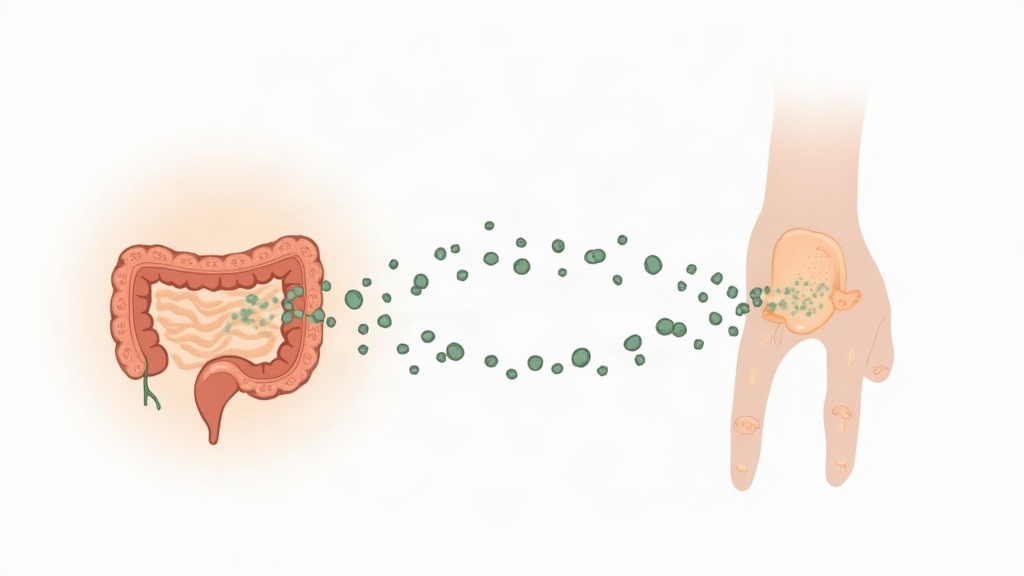
Fiber is the lever most people can pull. In a 28-day feasibility study in Erlangen, 36 RA patients ate high-fiber bars or cereal daily (Häger et al., 2019, Nutrients). Circulating regulatory T cells rose, the Th1 to Th17 balance shifted in a favorable direction, markers of bone erosion fell, and patient-reported outcomes improved. There was no control group, so this rates Grade C.
The practical target is 25 to 35 g of fiber a day from varied sources: oats, barley, lentils, beans, chickpeas, berries, vegetables, ground flax, and potatoes or rice that have been cooked and cooled (which forms resistant starch). Build up over two to three weeks to avoid bloating. For the probiotic question, see our review of probiotics for autoimmune disease; food-based fermentation has a stronger rationale in RA than capsules.
Foods to Avoid With Rheumatoid Arthritis (and Foods to Emphasize)
The list below pulls together the foods common to the diets that lowered disease activity, and the foods linked to higher RA risk or worse drug tolerance. It is a pattern, not a prescription.
Emphasize
Foods shared by the RA diets that moved disease activity
Fatty fish, 2 to 4 times a week
Salmon, sardines, mackerel, herring, trout
EPA and DHA. Eating fish 2+ times weekly tracked with a 0.49 lower DAS28 (Tedeschi 2018).
Vegetables and fruit, 5+ servings
Leafy greens, broccoli, berries, citrus, cherries
Polyphenols, vitamin C, potassium and fiber. The backbone of every positive diet trial.
Legumes, most days
Lentils, chickpeas, black beans, tofu, tempeh
Protein plus fermentable fiber that gut bacteria turn into butyrate.
Whole grains
Oats, barley, brown rice, rye, whole-wheat bread
Beta-glucan and resistant starch feed short-chain fatty acid producers.
Extra-virgin olive oil
2 to 4 tablespoons a day as the main fat
Oleocanthal and polyphenols. Core of the Mediterranean pattern.
Nuts and seeds
Walnuts, ground flax, chia, almonds
ALA omega-3, magnesium and fiber.
Fermented foods
Plain yogurt, kefir, sauerkraut, kimchi
Part of the ADIRA portfolio. Live cultures support microbial diversity.
Limit
Foods linked to higher RA risk, worse markers, or drug strain
Sugar-sweetened drinks
Regular soda, sweet tea, energy drinks
One or more sodas a day linked to 63% higher risk of seropositive RA (Hu 2014).
Processed and red meat
Bacon, sausage, deli meat, daily steak
Saturated fat and arachidonic acid. Control diets in the RA trials were meat-heavy.
Ultra-processed foods
Packaged snacks, fast food, pastries
Refined starch, added sugar, salt and little fiber in one package.
High-sodium foods
Canned soups, chips, restaurant meals, cured meats
Salt drives Th17 cells in lab models. High sodium doubled RA risk in smokers (Sundström 2015).
Alcohol
Especially binge drinking
Adds to liver strain from methotrexate and leflunomide. Ask your rheumatologist for your limit.
Fried foods and refined oils
Deep-fried foods, fat-heavy takeaway
Shift the omega-6 to omega-3 balance away from fish-derived fats.
Personal trigger foods
Found only through a structured elimination and reintroduction
Responses vary. Cut what you have tested, not what a list told you to fear.
Nightshades and gluten are not on the limit list. Neither has controlled evidence in RA unless you have a confirmed personal reaction or celiac disease.
Sugar-Sweetened Drinks
In the Nurses' Health Studies, women who drank one or more sugar-sweetened sodas a day had a 63% higher risk of developing seropositive RA than women who drank less than one a month (Hu et al., 2014, American Journal of Clinical Nutrition). Diet soda showed no association. This is risk data from healthy women, not a treatment trial, so it rates Grade C for people who already have RA. Swapping soda for water, sparkling water or unsweetened tea costs nothing.
Sodium
Salt pushes immune cells toward the inflammatory Th17 type in laboratory studies. In a Swedish nested case-control study of 386 people who later developed RA, high sodium intake was not linked to RA overall, but it more than doubled the risk among smokers (odds ratio 2.26) (Sundström et al., 2015, Rheumatology). Grade C. Most dietary sodium comes from packaged and restaurant food, not the salt shaker. Prednisone also causes fluid retention and raises blood pressure, which is another reason to keep sodium down.
Alcohol
The alcohol data cut two ways. In the Nurses' Health Studies, light drinking (about half to one drink a day) was associated with a modestly lower RA risk, hazard ratio 0.78 (Lu et al., 2014). That says nothing about treating established RA. Methotrexate and leflunomide both stress the liver, and alcohol adds to that load. Our methotrexate natural alternatives guide covers current alcohol guidance on methotrexate. The short version: ask your prescriber for your personal limit and never binge.
Red and Processed Meat
No trial has isolated meat in RA. But the control arms of the Sköldstam, ADIRA and Plants for Joints trials were all meat-heavy Western diets, and every intervention arm cut meat substantially. Grade C as a single food. Replacing most red and processed meat with fish, legumes and poultry fits all the diets that worked.
Nightshades and Dairy
Tomatoes, peppers, potatoes and eggplant appear on many "foods to avoid" lists for RA. There is no controlled trial showing that nightshade removal helps RA as a group. Dairy has the same problem: the Barnard trial removed it along with all animal foods, so its specific effect is unknown, and the ADIRA diet kept low-fat dairy and probiotic yogurt. If you suspect either, test it with a structured elimination (below) rather than cutting it on faith.
Gluten-Free and Elimination Diets for RA
Gluten-Free (Grade C Unless You Have Celiac Disease)
The one RA trial with a positive gluten-free arm combined it with vegan eating. Ingrid Hafström's group randomized 66 people with active RA to a gluten-free vegan diet or a balanced non-vegan diet for a year (Hafström et al., 2001, Rheumatology). Among completers, 40.5% on the gluten-free vegan diet met ACR20 improvement criteria, compared with 4% on the control diet. Antibodies to gliadin and beta-lactoglobulin fell in responders.
Because two things changed at once, the trial cannot tell you whether gluten mattered. No RA trial has tested gluten removal alone. If you have celiac disease, which is more common in people with autoimmune disease, strict gluten-free eating is Grade A and non-negotiable. Ask for a tTG-IgA blood test while you are still eating gluten. Our guide to gluten and joint inflammation explains the zonulin and molecular mimicry pathways in detail.
Elimination and Reintroduction (Grade C)
In 1986, Darlington and colleagues ran a blind, placebo-controlled study of dietary manipulation in RA outpatients (Lancet). Patients improved during diet periods more than during placebo periods, particularly a subgroup of "good responders." Part of the effect was placebo, but not all of it.
Individual food triggers appear to exist in a minority of people with RA. The only reliable way to find them:
- Remove one suspect food group (for example, dairy or nightshades) completely for three to four weeks.
- Track tender joints, morning stiffness minutes and pain on a 0 to 10 scale each day.
- Reintroduce the food in normal portions for three days and watch for a clear, repeatable flare.
- Keep it out only if the reaction repeats on a second challenge.
The full Autoimmune Protocol (AIP) removes far more foods at once and has no RA trial. Our comparison of AIP versus other diets explains when the stricter approach is worth the effort.
Weight, Muscle and Why the Scale Matters in RA
Body weight changes how well RA medication works. A meta-analysis of eight studies found obese patients had 43% lower odds of reaching remission than non-obese patients (Liu et al., 2017, Arthritis Care & Research). Fat tissue releases inflammatory cytokines such as IL-6 and TNF-alpha, the same molecules many RA drugs target.
This is one reason the plant-based trials performed well: participants lost roughly 4 to 6.5 kg. If you carry extra weight, a diet that produces gradual loss may help your current medication work better. Grade B for weight loss when overweight.
The opposite problem matters too. RA promotes loss of muscle mass, sometimes hidden under stable body weight. Aim for about 1.0 to 1.2 g of protein per kg of body weight a day, spread across meals, unless your doctor sets a different target for kidney reasons. Plant-based eaters can meet this with legumes, tofu, tempeh, seitan (if gluten is tolerated) and soy milk.
RA Diet Plan: A Sample Day
This day follows the Mediterranean and ADIRA pattern. It provides roughly 35 g of fiber and two fish-derived omega-3 meals. Adjust portions to your energy needs.
Breakfast: Steel-cut oats cooked in milk or soy milk, topped with blueberries, a tablespoon of ground flax and a handful of walnuts. Plain yogurt or kefir on the side.
Lunch: Large salad of leafy greens, chickpeas, cucumber, roasted peppers, red onion and cooled roasted potatoes, dressed with extra-virgin olive oil and lemon. Whole-grain rye bread.
Snack: An orange or a cup of cherries and a small handful of almonds.
Dinner: Baked salmon or sardines with herbs and olive oil, barley or brown rice, and steamed broccoli. Vegetarian swap: lentil and vegetable stew with tofu.
Drinks: Water, sparkling water, green tea or coffee. Alcohol only within the limit your rheumatologist sets.
A week built on this template includes fish three or four times, legume meals on most other days, and red or processed meat rarely. Spices such as turmeric and ginger add flavor, but culinary amounts do not reach the doses studied in trials. Our curcumin for rheumatoid arthritis guide explains the gap between turmeric in food and bioavailable supplements.
How Diet Works Alongside Methotrexate and Biologics
Every trial on this page tested diet in addition to standard treatment. Untreated RA can erode joints permanently within the first two years, and no diet has been shown to prevent that damage. Diet belongs beside DMARDs, not in their place.
Methotrexate
Methotrexate blocks folate metabolism, which is part of how it works and why it causes mouth sores, nausea and liver enzyme rises. Folic or folinic acid supplementation lowers those side effects. A systematic review of six randomized trials found folate cut gastrointestinal side effects by 26% and abnormal liver enzymes by 77%, and reduced methotrexate discontinuation (Shea et al., 2014, Journal of Rheumatology). Take the folate exactly as prescribed. Folate-rich foods such as leafy greens and legumes are part of a healthy RA diet and do not need to be avoided. Our methotrexate guide covers folate dosing and timing in detail.
Other methotrexate points that touch diet:
- Alcohol adds to liver strain. Follow your prescriber's limit.
- Fatty liver and obesity raise methotrexate liver risk, which gives weight loss and lower sugar intake a second benefit.
- Nausea on dose day often eases with a small, bland meal and ginger tea. Ask before fasting near your dose.
Biologics and JAK Inhibitors
TNF inhibitors, IL-6 blockers and JAK inhibitors suppress parts of the immune system and raise the risk of serious infections, including foodborne listeriosis. Follow the food safety rules used for other immunosuppressed patients: skip unpasteurized milk and cheese, cook meat, eggs and fish thoroughly, wash produce well, and be careful with deli meats and refrigerated smoked fish. This does not mean avoiding fish. Cooked salmon and canned sardines are safe.
Prednisone
Steroids raise blood sugar, blood pressure and appetite, and they thin bone. On prednisone, keep sugar and sodium low, get enough calcium and vitamin D (discuss supplements with your doctor), and keep protein intake steady to protect muscle.
Supplements Beside the Diet
Food sets the foundation. Supplements such as fish oil, vitamin D and curcumin add targeted doses that are hard to reach through diet. These carry drug interactions, especially fish oil with blood thinners. Use the RA supplements guide and talk to your rheumatologist before adding anything.
Building Your RA Diet: A Practical Order
Start with the changes that have the most evidence and the least restriction:
- Fatty fish two to four times a week and olive oil as your main fat.
- Fiber up to 25 to 35 g a day from oats, legumes, vegetables and fruit.
- Cut sugary drinks, processed meat and salty packaged food.
- Gradual weight loss if you are overweight, with enough protein to protect muscle.
- A structured elimination trial only if symptoms persist and you suspect a specific food.
- Fasting or a fasting mimicking diet only with your rheumatologist's approval, and with a plan for what follows.
Track the same markers before and after: tender and swollen joint counts, morning stiffness in minutes, fatigue, and CRP or ESR from your regular blood work. Give each change at least 12 weeks. If you also have skin psoriasis with joint pain, our guide to psoriatic arthritis natural treatment covers the overlap. For a broader view across conditions, see the best supplements for autoimmune disease and our autoimmune flare-up treatment guide.
When to See Your Doctor
Diet changes are low-risk, but call your rheumatologist if:
- Joints become newly swollen, hot or red, or morning stiffness lasts longer than an hour despite treatment.
- You lose weight without trying, or lose more than about 1 kg a week on a new diet.
- You develop fever, chills or signs of infection while on a biologic or JAK inhibitor.
- You plan a fast of more than 24 hours, a very low-calorie diet, or a switch to strict vegan eating while on methotrexate, prednisone or diabetes medication.
- Fatigue, numbness or tingling appears on a vegan diet, which may signal low B12.
Frequently Asked Questions
What is the best diet for rheumatoid arthritis?
A Mediterranean-style diet. It has randomized trial support, the American College of Rheumatology recommends it, and it lowers cardiovascular risk, which is high in RA. Plant-based patterns showed larger drops in some smaller trials and are a reasonable alternative if you can sustain them.
What foods should you avoid with rheumatoid arthritis?
Limit sugar-sweetened drinks, processed and red meat, ultra-processed snacks, salty packaged and restaurant food, fried foods and heavy drinking. No food is banned for everyone with RA. Remove a food only if a structured elimination and reintroduction shows it affects you.
Is a vegan diet good for rheumatoid arthritis?
It can lower disease activity. The Barnard 2025 and Hafström 2001 trials both found benefit, and the Plants for Joints program improved DAS28 by 0.9 points versus usual care. Plan for vitamin B12, an algal omega-3 source, vitamin D, calcium and enough protein.
Does fasting help rheumatoid arthritis?
Short supervised fasts reduce symptoms within days, but the benefit fades after normal eating resumes. The 1991 Lancet trial maintained its benefit for a year only because a vegetarian diet followed. Do not attempt multi-day fasts on RA medication without medical supervision.
Should I go gluten-free for RA?
Only if you have celiac disease or a tested personal reaction. No RA trial has isolated gluten. Get a celiac blood test before removing gluten.
Can diet put rheumatoid arthritis into remission?
Not on its own. Remission in RA relies on DMARD therapy. Diet can lower disease activity, help medication work better, and reduce cardiovascular and metabolic risk. Never reduce your medication without your rheumatologist.
Find Your Personalized RA Protocol
Diet is one layer. Your best plan depends on your disease activity, medication, weight, gut symptoms and other conditions. Take the free 3-minute AutoimmuneFinder quiz to get an evidence-graded protocol matched to your profile, including which diet approach fits you.
This site provides educational information only. Not medical advice. Always consult your healthcare provider before changing your treatment plan. Do not stop or reduce methotrexate, biologics, JAK inhibitors, prednisone or any prescribed RA medication without your rheumatologist. Fasting, very low-calorie diets and major diet changes should be supervised if you take prescription medication, are pregnant, or have diabetes, kidney disease or a history of eating disorders.