Key takeaways
The 30-second version
- There is no natural cure for scleroderma. Systemic sclerosis can damage the lungs, heart, kidneys and gut, so regular specialist checks are the most important thing you can do.
- Know your type. Morphea stays in the skin. Limited and diffuse systemic sclerosis can reach internal organs and carry different risks.
- The best-supported self-care steps: twice-daily mouth and hand exercises, supervised exercise for fatigue, quitting smoking, and getting screened for weight loss and poor nutrition.
- For gut trouble, reflux habits and doctor-guided SIBO treatment come first. Probiotics have mixed results. Vitamin D is worth testing, but it will not soften skin.
- Skip PABA, "detox" and chelation programs. Check every supplement against mycophenolate, nintedanib or nifedipine with your doctor or pharmacist, and never stop a prescribed drug on your own.
Want a version built around your symptoms and labs?
Take the 3-min quiz →Scleroderma natural treatment has a narrow but real role: no diet or supplement slows systemic sclerosis itself, yet several complementary measures improve specific symptoms in randomized trials. The strongest are orofacial stretching for mouth opening (Cüzdan 2021, n=56), supervised hand physiotherapy (SCLEREDUC, Rannou 2017, n=220), supervised interval and resistance training for fatigue and pain (Mitropoulos 2025, n=170) and smoking cessation (Hudson 2011, n=606). Routine malnutrition screening is an expert-panel recommendation, backed by a 586-patient cohort (Baron 2009) showing that high malnutrition risk is common. Gut-directed probiotics are Grade C after mixed trials, vitamin D is worth correcting but has no disease-modifying data, and potassium para-aminobenzoate (PABA) failed a placebo-controlled trial. All of this sits on top of organ screening and specialist drug therapy, which decide outcomes in systemic sclerosis.
This guide grades each measure A, B or C, explains how morphea differs from systemic sclerosis, and lists the drug-supplement interactions that matter with mycophenolate, nintedanib and calcium channel blockers. Discuss every change with your rheumatologist before you start.
What Scleroderma Is (and Why Subtype Matters)
Scleroderma means "hard skin." The word covers two different diseases that share a name and little else.
Localized scleroderma (morphea) produces patches or bands of thickened skin. Linear forms in children can reach fat, muscle and bone, and facial forms need prompt treatment. The 2024 German S2k guideline (Kreuter et al., J Dtsch Dermatol Ges) states that morphea does not involve internal organs and does not progress to systemic sclerosis.
Systemic sclerosis (SSc) is an autoimmune disease of small blood vessels, immune activation and fibrosis. It is divided by skin extent:
- Limited cutaneous SSc affects skin below the elbows and knees and the face. It often follows years of Raynaud's, is linked to anti-centromere antibodies, and carries a higher long-term risk of pulmonary arterial hypertension (PAH).
- Diffuse cutaneous SSc spreads above the elbows or knees or onto the trunk, usually moves faster in the first five years, and is linked to anti-Scl-70 (anti-topoisomerase I) and anti-RNA polymerase III antibodies. Interstitial lung disease and scleroderma renal crisis cluster here.
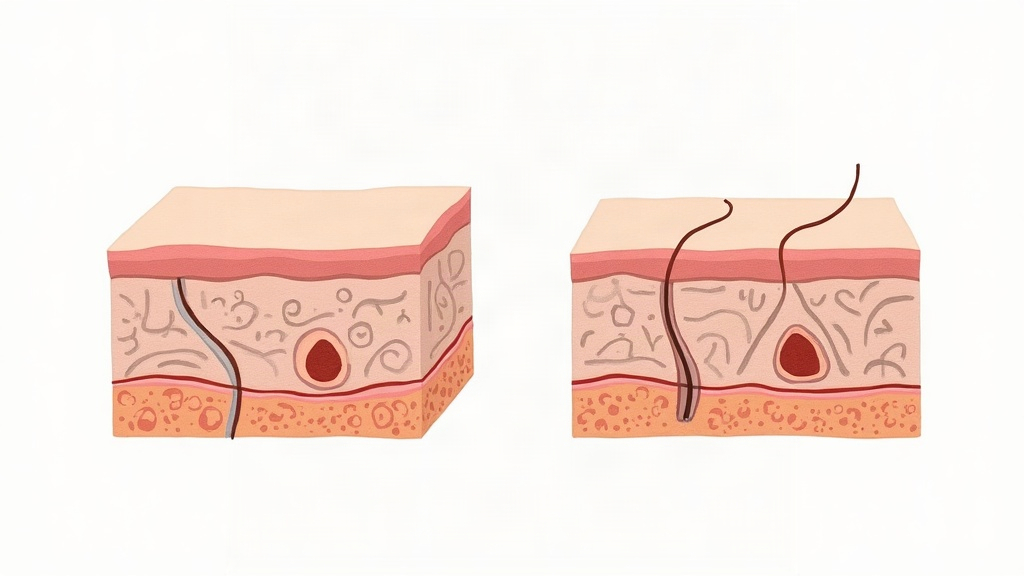
Antibody profile and subtype change what your doctor watches for. They also change which self-care matters most. Someone with limited disease and severe reflux needs a different plan from someone two years into diffuse disease with tightening hands and rising blood pressure.
If you are still unsure whether your symptoms point to scleroderma, lupus or Sjögren's, start with our overview of autoimmune disease symptoms.
Specialist Monitoring Is Non-Negotiable
Most deaths in systemic sclerosis come from the lungs, the pulmonary circulation and the heart. These problems often start silently. A normal-feeling year can hide a falling lung diffusion score that only a test will catch.
Current guidance is specific:
- Lungs. The 2023 ACR/CHEST guideline (Johnson et al., Arthritis Rheumatol 2024) conditionally recommends pulmonary function tests and high-resolution CT for screening people with SSc for interstitial lung disease, and recommends against relying on chest X-ray or a six-minute walk test.
- Pulmonary arterial hypertension. The 2022 ESC/ERS guideline (Humbert et al.) recommends yearly screening for PAH in systemic sclerosis, using a multimodal approach such as the DETECT algorithm rather than echocardiography alone.
- Kidneys. Scleroderma renal crisis is a medical emergency of sudden high blood pressure and kidney injury. In a case-control study of 110 patients (Steen and Medsger 1998, Arthritis Rheum), prednisone at 15 mg/day or more in the prior six months was linked to more than four times the odds of renal crisis. A sudden rise in blood pressure is often the first sign, so ask your rheumatology team whether home blood pressure checks make sense for you.
- Gut and nutrition. A North American expert panel (Baron et al. 2010, Clin Exp Rheumatol) recommends screening all SSc patients for malnutrition.
Systemic Sclerosis Organ Monitoring Checklist
What your specialist team should be checking, and the symptoms that should never wait for the next appointment.
| Organ | Test | How often | Higher risk if | Call your team now if |
|---|---|---|---|---|
| Lungs (interstitial lung disease) | Pulmonary function tests with DLCO; high-resolution CT of the chest at baseline | PFTs at diagnosis, then every 3 to 12 months depending on risk; HRCT at baseline and when results change | Diffuse skin disease, anti-Scl-70 (anti-topoisomerase I) antibodies, early disease (first 5 years) | New or worsening breathlessness, dry cough that will not settle, reduced exercise tolerance |
| Heart and pulmonary circulation (PAH) | Echocardiogram plus a multimodal screen (DLCO, NT-proBNP, DETECT algorithm); right heart catheter if screening is positive | Yearly screening for everyone with systemic sclerosis | Limited cutaneous disease of long duration, anti-centromere antibodies, falling DLCO | Breathlessness out of proportion to lung scans, fainting, chest pain, ankle swelling, palpitations |
| Kidneys (scleroderma renal crisis) | Blood pressure checks, creatinine, urinalysis | Regular home blood pressure checks (often advised weekly) in early diffuse disease; labs at every rheumatology visit | Early diffuse disease, anti-RNA polymerase III antibodies, prednisone at 15 mg/day or more | A sudden rise in blood pressure, severe headache, blurred vision, reduced urine output. Treat as an emergency. |
| Gut (esophagus to colon) | Symptom review (UCLA GIT 2.0), weight, malnutrition screen (MUST), iron, B12, folate, vitamin D; breath test or endoscopy as needed | Weight and nutrition screen at every visit; labs at least yearly | Any skin subtype; more common with longer disease duration | Unintended weight loss, food sticking, vomiting, black stools, alternating diarrhea and bloating |
| Skin, hands and blood vessels | Modified Rodnan skin score, digital ulcer check, nailfold capillaroscopy, hand range of motion | Every rheumatology visit | Severe Raynaud’s, smoking, diffuse disease | A new fingertip sore, a finger that stays white or blue, signs of infection around an ulcer |
| Muscles, joints and bones | Strength and function scores (HAQ-DI), creatine kinase, bone density (DXA) when risk factors present | Yearly, or sooner with new symptoms | Overlap syndromes, long-term steroids, low vitamin D, malabsorption | New muscle weakness, tendon rubbing sensation, sudden joint swelling |
Lungs (interstitial lung disease)
Test
Pulmonary function tests with DLCO; high-resolution CT of the chest at baseline
PFTs at diagnosis, then every 3 to 12 months depending on risk; HRCT at baseline and when results changeHigher risk if
Diffuse skin disease, anti-Scl-70 (anti-topoisomerase I) antibodies, early disease (first 5 years)
Call your team now if
New or worsening breathlessness, dry cough that will not settle, reduced exercise tolerance
Heart and pulmonary circulation (PAH)
Test
Echocardiogram plus a multimodal screen (DLCO, NT-proBNP, DETECT algorithm); right heart catheter if screening is positive
Yearly screening for everyone with systemic sclerosisHigher risk if
Limited cutaneous disease of long duration, anti-centromere antibodies, falling DLCO
Call your team now if
Breathlessness out of proportion to lung scans, fainting, chest pain, ankle swelling, palpitations
Kidneys (scleroderma renal crisis)
Test
Blood pressure checks, creatinine, urinalysis
Regular home blood pressure checks (often advised weekly) in early diffuse disease; labs at every rheumatology visitHigher risk if
Early diffuse disease, anti-RNA polymerase III antibodies, prednisone at 15 mg/day or more
Call your team now if
A sudden rise in blood pressure, severe headache, blurred vision, reduced urine output. Treat as an emergency.
Gut (esophagus to colon)
Test
Symptom review (UCLA GIT 2.0), weight, malnutrition screen (MUST), iron, B12, folate, vitamin D; breath test or endoscopy as needed
Weight and nutrition screen at every visit; labs at least yearlyHigher risk if
Any skin subtype; more common with longer disease duration
Call your team now if
Unintended weight loss, food sticking, vomiting, black stools, alternating diarrhea and bloating
Skin, hands and blood vessels
Test
Modified Rodnan skin score, digital ulcer check, nailfold capillaroscopy, hand range of motion
Every rheumatology visitHigher risk if
Severe Raynaud’s, smoking, diffuse disease
Call your team now if
A new fingertip sore, a finger that stays white or blue, signs of infection around an ulcer
Muscles, joints and bones
Test
Strength and function scores (HAQ-DI), creatine kinase, bone density (DXA) when risk factors present
Yearly, or sooner with new symptomsHigher risk if
Overlap syndromes, long-term steroids, low vitamin D, malabsorption
Call your team now if
New muscle weakness, tendon rubbing sensation, sudden joint swelling
Based on the 2023 ACR/CHEST ILD screening guideline, 2022 ESC/ERS pulmonary hypertension guideline, EULAR 2023 SSc recommendations and North American nutrition screening recommendations. Intervals vary by subtype and antibody profile; your rheumatologist sets the schedule.
No supplement replaces any line in that table. The EULAR 2023 treatment recommendations (Del Galdo et al., Ann Rheum Dis 2025) now include mycophenolate, rituximab and tocilizumab for skin and/or lung disease, and nintedanib for lung disease. In the SLS II trial (Tashkin 2016, Lancet Respir Med), mycophenolate matched cyclophosphamide for lung function with better tolerability. In SENSCIS (Distler et al., NEJM 2019, n=576), nintedanib slowed the annual decline in forced vital capacity by about 41 mL per year versus placebo, with no effect on skin thickening. These drugs change the course of the disease. The measures below make daily life with it better.
How We Grade the Evidence
- Grade A: multiple randomized trials or a meta-analysis in scleroderma showing benefit. No complementary measure reaches this bar today.
- Grade B: at least one adequately sized randomized trial in SSc, or a large cohort with a consistent effect.
- Grade C: small open studies, mixed results, or evidence borrowed from other conditions.
- Avoid: tested and failed, or carries risk without benefit.
Reflux and heartburn
- C
Small meals, no food 3 hours before bed, raise head of bed
Standard GERD measures, evidence from general reflux studies; work alongside a PPI, not instead of one
- C
Multi-strain probiotic for 4 months
Low 2019 RCT: reflux score improved only at 120 days
Bloating, diarrhea, suspected SIBO
- C
Breath test, then doctor-guided antibiotics
Standard care, but SSc data come from small uncontrolled studies; relapse is common
- C
Saccharomyces boulardii
Open pilot (n=40): fewer GI symptoms, alone or with metronidazole
- C
Lactobacillus or Bifidobacterium probiotics
Frech 2011 pilot helped; Marighela 2019 RCT (n=73) did not
Weight loss and poor intake
- C
Malnutrition screen (MUST) and dietitian referral
Expert-panel recommendation; about 18% at high risk in a 586-patient cohort
- C
Energy-dense small meals, oral nutrition shakes
Expert consensus; no SSc-specific trial
Tight hands and reduced function
- B
Supervised hand physiotherapy plus home exercise
SCLEREDUC RCT (n=220): hand function better at 1 month, fades without practice
- C
Daily emollients for skin
Comfort and skin integrity; no effect on fibrosis
Small mouth opening (microstomia)
- B
Twice-daily orofacial stretching exercises
Cüzdan 2021 RCT (n=56): mouth opening increased in 1 month
- C
Dentist every 6 months, small-head toothbrush
Expert recommendation; dental disease is common
Fatigue, pain, low mood
- B
Supervised interval and resistance training
Mitropoulos 2025 RCT (n=170): less fatigue, pain and depression
- C
Peer support and self-management programs
Mixed trial results
Raynaud’s and digital ulcers
- B
Stop smoking
Hudson 2011 cohort (n=606): smoking worsened vascular, GI and lung outcomes
- C
Core warmth, gloves, stress control
See our Raynaud’s guide
- C
Topical vitamin E gel on ulcers (with standard care)
Fiori 2009 open study (n=27): faster healing
Bones and low vitamin D
- C
Test 25(OH)D and correct deficiency
Deficiency is common; no trial shows supplementation changes SSc itself
Skin fibrosis (claims to reverse it)
- Avoid
PABA (Potaba, aminobenzoate potassium)
Clegg 1994 RCT (n=146): no better than placebo
- Avoid
Oral calcitriol
Hulshof 2000 RCT: no benefit in morphea; SSc group too small to judge
- Avoid
"Detox", chelation, L-tryptophan, immune boosters
No evidence; real risks
No complementary measure has Grade A evidence in scleroderma. These measures support symptoms and function. They do not replace immunosuppressive, antifibrotic or vascular therapy chosen by your rheumatologist.
The Scleroderma Gut: Reflux, SIBO and Malnutrition
The gut is involved in up to 90 percent of people with systemic sclerosis in most clinical series, from the esophagus to the anal sphincter. Smooth muscle stiffens, the esophagus stops squeezing, the stomach empties slowly, and the small bowel loses the rhythmic waves that sweep bacteria downstream. The result is reflux, early fullness, bloating, diarrhea, constipation and weight loss, often in the same person.
Reflux: Habits Plus Medication (Grade C for habits as add-on)
Lower esophageal sphincter weakness is mechanical. No supplement fixes it. The habits that reduce acid exposure are the same ones gastroenterologists recommend for any severe reflux. Their evidence comes from general reflux studies, not SSc trials, which is why we grade them C:
- Eat smaller meals more often.
- Stop eating about three hours before lying down.
- Raise the head of the bed with blocks or a wedge, not extra pillows.
- Limit late alcohol, large fatty meals and peppermint if they trigger you.
Proton pump inhibitors remain the backbone of treatment in SSc reflux, and EULAR 2023 recommends them. Long-term acid suppression has a cost: it can encourage small intestinal bacterial overgrowth and, with mycophenolate mofetil, lower drug exposure (see the interactions section). That is a reason to review the dose with your doctor, not a reason to stop.
SIBO: Test, Treat, Expect Relapse
Small intestinal bacterial overgrowth is common in SSc because the bowel cannot clear bacteria. Symptoms are bloating, gas, loose stools and, over time, malabsorption of fat, B12 and fat-soluble vitamins.
The standard approach is a breath test or a clinical diagnosis followed by rotating courses of antibiotics prescribed by your doctor. A 2018 systematic review (Pittman et al., Rheumatology) estimated SIBO affects 30 to 60 percent of SSc patients and found only five small, mostly uncontrolled treatment studies (78 patients in total), which suggested antibiotics can clear SIBO in some patients. A doctor-led plan is still the starting point.
Saccharomyces boulardii: Grade C. In an open pilot trial in 40 SSc patients with SIBO (García-Collinot 2020, Dig Dis Sci), patients took metronidazole, S. boulardii, or both for two months. SIBO cleared in 55 percent of the combination group, 33 percent with S. boulardii alone and 25 percent with metronidazole alone. Diarrhea, abdominal pain and bloating improved in both groups that took S. boulardii, but not with metronidazole alone. The trial was open-label and small, so the result needs replication. S. boulardii is a yeast; people on strong immunosuppression or with central lines should ask their doctor first, because rare bloodstream infections have been reported in vulnerable patients.
Probiotics: Mixed Results (Grade C)
Three trials define what we know:
- Frech et al. 2011 (Clin Exp Rheumatol): an open pilot in 10 patients with moderate to severe bloating. Two months of Bifidobacterium infantis or Lactobacillus GG improved total GI scores, with the biggest effect on bloating.
- Marighela et al. 2019 (Rheumatology): a randomized, placebo-controlled trial in 73 patients using a four-strain probiotic for eight weeks. Overall GI symptoms did not improve versus placebo. Th17 cells, an inflammatory T-cell subset, fell in the probiotic group.
- Low et al. 2019 (Semin Arthritis Rheum): a double-blind trial in 40 patients using a high-dose multi-strain product. No difference at 60 days. After 120 days of probiotics, reflux scores improved compared with patients who had only 60 days, and stool microbial diversity increased.
The pilot was positive and the two controlled trials were mostly negative. A defined trial of a multi-strain product for three to four months, with a symptom score before and after, is reasonable. Indefinite use without a benefit is not. Our probiotics for autoimmune disease guide covers strain selection in more depth.
Malnutrition Screening (Grade B)
In 586 patients from the Canadian Scleroderma Research Group (Baron et al. 2009, J Rheumatol), almost 18 percent were at high risk of malnutrition on the Malnutrition Universal Screening Tool (MUST). Risk tracked with GI symptoms, diffuse disease, reduced mouth opening and severity. Malnutrition in SSc predicts worse survival, and it is easy to miss when weight drops slowly.
Ask for a MUST score, a weight trend and labs for iron, ferritin, B12, folate, vitamin D, and albumin if weight is falling. If you screen positive, the expert panel advises referral to a dietitian and a gastroenterologist.
What to Eat
There is no scleroderma diet with randomized evidence. A 2025 review (Balbuena Hurtado et al., Curr Opin Rheumatol) found low-FODMAP, Mediterranean and ketogenic diets studied only in small samples. A 66-patient microbiome study (Nguyen et al. 2023, Semin Arthritis Rheum) linked worse GI symptoms to lower microbial diversity and more pathobiont bacteria, but patients already following a low-FODMAP diet had no fewer GI symptoms than those who were not.
A practical, low-risk pattern:
- Small, energy-dense meals: eggs, fish, olive oil, nut butters, yogurt if tolerated, smoothies.
- Soft textures when food sticks: well-cooked vegetables, stews, mashed root vegetables. Sit upright while eating and for 30 minutes after.
- A short low-FODMAP trial with a dietitian if bloating dominates, followed by reintroduction.
- Mediterranean-style fats and fish for general cardiovascular health.
Be wary of restrictive plans. The autoimmune diet comparison explains AIP, Mediterranean, low-FODMAP and others. Strict elimination is a poor fit for someone who is already losing weight.
Raynaud's and Digital Ulcers
Raynaud's phenomenon affects nearly everyone with systemic sclerosis and is often the first sign. In SSc it is secondary Raynaud's, driven by structural damage to small arteries, and it can progress to painful fingertip ulcers. Our full Raynaud's natural treatment guide covers cold strategy, biofeedback and supplements in detail. Three points are specific to scleroderma.
Smoking cessation (Grade B). In the Canadian cohort of 606 SSc patients (Hudson et al. 2011, Arthritis Rheum), smoking had a significant negative effect on almost all vascular, GI and respiratory outcomes. Stopping was associated with less severe Raynaud's. The nintedanib label also reports 21 percent lower drug exposure in current smokers. Quitting is the most powerful lifestyle change available in this disease.
Fish oil is weaker in secondary Raynaud's (Grade C for SSc). In the DiGiacomo 1989 trial (Am J Med, n=32), high-dose fish oil delayed vasospasm in primary Raynaud's but not in secondary Raynaud's. Omega-3s remain a reasonable heart-health choice, but they should not be expected to protect fingers in SSc.
Topical vitamin E for ulcers (Grade C). In an open randomized pilot of 27 patients with 86 digital ulcers (Fiori 2009, Clin Exp Rheumatol), vitamin E gel added to standard ulcer care shortened healing time. A digital ulcer still needs medical review, since vasodilators, infection control and sometimes iloprost are what save tissue.
Skin, Hands and Mouth: Where Exercise Has Real Data
Fibrosis tightens skin over joints. Over months, fingers curl, wrists stiffen and the mouth narrows. Exercise cannot dissolve collagen, but it can preserve range of motion and function.
Hand Physiotherapy (Grade B)
The SCLEREDUC trial (Rannou et al. 2017, Arthritis Care Res) randomized 220 SSc patients to one month of personalized, supervised physiotherapy followed by home sessions, or to usual care. Disability (HAQ-DI) improved at one month but was no different at 12 months. Hand mobility, hand function and pain were significantly better at one month. Microstomia (small mouth opening) was lower in the physiotherapy group at 1, 6 and 12 months.
The lesson is consistent with other rehabilitation trials: supervised blocks produce gains, and the gains fade when the practice stops. A smaller 2025 trial (Wantha et al., Life, 72 patients) found that video guides, with or without weekly phone reminders, improved hand grip strength more than education alone after six weeks, which suggests that structured home support helps people keep going.
What a hand program usually includes, guided by a hand therapist:
- Warm-up in warm water or with paraffin to soften tissue
- Finger flexion and extension, tabletop and fist stretches, thumb opposition
- Wrist circles and prayer stretches held for 20 to 30 seconds
- Grip strengthening with putty or a soft ball
- Splints at night for some patients with contractures
Mouth Opening Exercises (Grade B)
A narrowing mouth makes eating, dental care and speech harder. In a single-blind randomized trial of 56 SSc patients with reduced mouth opening (Cüzdan et al. 2021, Arch Rheumatol), a twice-daily home orofacial program increased mouth opening within one month. The control group improved once it started the same program a month later.
A typical routine, done twice a day:
- Open the mouth as wide as possible and hold for 10 seconds, five to ten times.
- Stretch the cheeks outward with clean thumbs inside the mouth, holding each side.
- Stack tongue depressors between the front teeth, adding one as opening improves.
- Exaggerated vowel shapes and smiles to stretch the lips.
- Gentle facial massage before stretching.
Pair this with a dental visit every six months. Dry mouth often overlaps with Sjögren's in SSc, and our Sjögren's natural treatment guide covers saliva support.
Skin Care (Grade C)
Thickened skin is often dry, itchy and prone to cracks. Fragrance-free emollients applied after bathing, lukewarm rather than hot water, and gloves for chores protect the skin barrier. None of these change fibrosis. Topical compounds marketed for collagen, such as copper peptides, have no scleroderma data; our GHK-Cu review explains why the theory is untested.
Fatigue, Pain and Mood: Supervised Exercise (Grade B)
Fatigue and pain are among the most disabling symptoms of SSc, and drugs do little for them. The strongest trial to date came out in 2025. In a European multicentre randomized trial (Mitropoulos et al., RMD Open), 170 people with SSc, 89 percent with limited disease, completed 12 weeks of twice-weekly supervised sessions combining 30 minutes of high-intensity interval training with 15 minutes of resistance work, or usual care. Fatigue, pain, depression, quality of life, function, strength and fitness all improved in the exercise group at 12 weeks. No safety concerns emerged.
Two cautions. Most participants had limited disease, so results may not transfer to people with significant lung disease or PAH. And exercise intensity in SSc should be cleared by your team after your lung and heart screening results are known. For anyone with interstitial lung disease, pulmonary rehabilitation is the safer entry point.
Stress, anxiety and depression are common in SSc and worsen Raynaud's attacks. Peer support and self-management programs have mixed trial results (Wojeck et al. 2021 systematic review, Res Nurs Health), so we grade them C. They are still worth trying, especially through scleroderma patient organizations.
Vitamin D and Other Supplements
Vitamin D (Grade C)
A 2025 meta-analysis (Dhaouadi et al., J Scleroderma Relat Disord) found vitamin D levels averaged about 11.7 ng/mL lower in SSc patients than in healthy controls, with insufficiency and deficiency both more common. Malabsorption, avoidance of sun and thickened skin all reduce vitamin D status, and bone density is often low in SSc.
Correcting a measured deficiency supports bone and muscle. It has not been shown to slow skin or organ disease. In a randomized, double-blind trial (Hulshof et al. 2000, J Am Acad Dermatol), nine months of oral calcitriol did not improve skin scores more than placebo in 20 patients with morphea; the SSc group (7 patients) was too small to draw conclusions. Test 25(OH)D, replace to the range your doctor recommends, and recheck. The broader evidence on vitamin D in autoimmunity, including the VITAL trial, is covered in our best supplements for autoimmune disease guide.
Omega-3 Fatty Acids (Grade C)
Fish oil reduces some inflammatory markers and supports cardiovascular health, which matters in a disease with cardiac involvement. Disease-specific trials in SSc are lacking, and the small placebo-controlled DiGiacomo trial found no benefit in secondary Raynaud's. A modest dose with meals is reasonable for heart health. Discuss high doses if you take anticoagulants or have digital ulcers that bleed.
Iron, B12 and Fat-Soluble Vitamins (Grade C, but test-driven)
Gastric antral vascular ectasia ("watermelon stomach") causes slow blood loss in some SSc patients, and SIBO and malabsorption deplete B12 and fat-soluble vitamins. Supplements here should follow lab results. Ask your pharmacist whether iron needs to be spaced apart from your mycophenolate dose.
Curcumin, NAC and Other Antifibrotic Claims
Curcumin has antifibrotic effects in preclinical models, and intravenous N-acetylcysteine has been studied for Raynaud's in SSc. None of these have controlled trials showing oral supplements change skin, lung or vascular disease. We grade them C at best and suggest discussing them only once the basics above are in place.
What Is Unproven or Risky
PABA (Potaba, potassium para-aminobenzoate). Still marketed as a skin-softening "vitamin." The positive data came from retrospective records. In a 48-week randomized, double-blind trial in 146 patients (Clegg et al. 1994, J Rheumatol), there was no difference from placebo in skin scores, mouth opening, hand motion or global assessments. Grade: Avoid.
"Detox," heavy-metal chelation and cleanses. No evidence in SSc. Aggressive cleanses and fasting regimens worsen weight loss in a disease where malnutrition already affects nearly one in five patients. Chelation carries kidney risk, and the kidneys are already vulnerable in diffuse SSc.
L-tryptophan and 5-HTP. Contaminated L-tryptophan supplements caused the eosinophilia-myalgia syndrome epidemic in 1989, a scleroderma-like illness. Many clinicians advise people with SSc to avoid these products.
Immune-stimulating herbs. Echinacea, high-dose elderberry and "immune boosters" are designed to activate immunity, the opposite goal of mycophenolate and other immunosuppressants. Our supplements to avoid list explains the reasoning.
Self-treating with steroids. Not a natural measure, but common in online advice. High-dose prednisone is linked to renal crisis in SSc. Any steroid course should come from your rheumatologist.
Low-dose naltrexone. LDN has a growing following in autoimmune communities, and our LDN guide reviews the evidence. In SSc the data are limited to small reports on itch and quality of life, which places it at Grade C.
Drug-Supplement Interactions in Scleroderma Treatment
Many people with SSc take several prescription drugs. The interactions below come from the US prescribing information unless noted.
Mycophenolate (CellCept, Myfortic)
- Magnesium or aluminum hydroxide antacids lower mycophenolic acid exposure. The label advises taking them at least two hours after mycophenolate.
- Sevelamer and other calcium-free phosphate binders reduce exposure; give at least two hours after.
- Proton pump inhibitors reduce exposure to mycophenolate mofetil. Your doctor may monitor for reduced effect, or switch formulation.
- Cholestyramine and other bile acid sequestrants lower levels by interrupting recycling of the drug.
- Live vaccines should be avoided, and other vaccines may work less well. Plan vaccinations with your team.
- Sun exposure: the label warns of increased skin cancer risk and advises sun protection.
- Pregnancy: mycophenolate causes birth defects and pregnancy loss. Women of reproductive potential need contraception counseling.
- Immune-stimulating herbs such as echinacea work against the drug's purpose.
Nintedanib (Ofev)
- St. John's wort and other P-gp and CYP3A4 inducers (carbamazepine, phenytoin) lower nintedanib levels and should be avoided.
- P-gp and CYP3A4 inhibitors such as erythromycin raise levels; your doctor will monitor closely.
- Liver: liver enzymes are checked before and during treatment. Be cautious with supplements linked to liver injury, such as concentrated green tea extract, high-dose niacin and kava.
- Bleeding: the label notes bleeding risk. Discuss high-dose fish oil, ginkgo, vitamin E and garlic supplements.
- Diarrhea is the most common side effect. It also worsens malnutrition, so report it early rather than adding more probiotics on your own.
- Take with food, and do not smoke: smoking lowered drug exposure by about 21 percent.
Calcium Channel Blockers (Nifedipine, Amlodipine)
- Grapefruit and grapefruit juice can raise levels of some dihydropyridine calcium channel blockers, especially nifedipine and felodipine (amlodipine much less so), causing low blood pressure, dizziness and swelling. Avoid regular grapefruit unless your pharmacist says your drug is unaffected.
- St. John's wort can lower levels through CYP3A4 induction.
- Blood pressure stacking: supplements that lower blood pressure (high-dose magnesium, L-arginine, beetroot nitrate concentrates) may add to the effect. Check with your doctor before combining.
PDE5 Inhibitors (Sildenafil, Tadalafil)
Used for Raynaud's, digital ulcers and PAH. Avoid nitrate medications and "natural" erectile or vascular products that may contain undeclared PDE5 drugs. Grapefruit can raise sildenafil levels.
Morphea Natural Treatment: A Shorter List
Because morphea stays in the skin and underlying tissue, the stakes and the plan differ. The 2024 S2k guideline recommends topical corticosteroids for limited plaques, UV phototherapy as an option, and methotrexate for severe, linear or deep disease, with mycophenolate for refractory cases. Facial linear morphea in children needs early systemic treatment to protect growth.
Complementary measures with sense behind them:
- Emollients and gentle skin care for dryness and itch (Grade C).
- Physiotherapy and stretching when a linear band crosses a joint, to protect range of motion (Grade C, extrapolated from SSc data).
- Sun protection on active plaques, which can darken with sun exposure (Grade C).
Oral calcitriol, which some websites still promote, failed in morphea in the Hulshof 2000 trial. Evidence for herbs and oral supplements in morphea is effectively absent.
Building Your Plan
Every person with systemic sclerosis:
- Keep your organ screening schedule: lung function, chest imaging as advised, yearly PAH screening, blood pressure checks.
- Stop smoking, with medical support.
- Ask for a malnutrition screen and a weight trend at every visit.
- Start twice-daily hand and mouth exercises; ask for a hand therapy referral.
- Test vitamin D, iron, B12 and folate, and replace what is low.
Add when relevant:
- Reflux: meal timing, bed elevation, PPI review with your doctor.
- Bloating or diarrhea: breath test, doctor-guided SIBO treatment, then a time-limited probiotic or S. boulardii trial.
- Fatigue and pain: supervised exercise once lung and heart status is known.
- Raynaud's: see the Raynaud's guide.
If your symptoms flare between visits, our autoimmune flare-up guide covers general measures. For lupus overlap features such as rash, photosensitivity or kidney findings, read natural remedies for lupus and raise them with your rheumatologist.
Find Your Personalized Protocol
Scleroderma rarely travels alone. Many people also deal with Raynaud's, Sjögren's features, thyroid disease or gut problems that change which measures matter most. Take the free 3-minute quiz to find your personalized protocol, with each intervention graded by evidence and flagged for medication interactions.
References
- Baron M, et al. Malnutrition is common in systemic sclerosis: results from the Canadian Scleroderma Research Group database. J Rheumatol. 2009.
- Baron M, et al. Screening and therapy for malnutrition and related gastro-intestinal disorders in systemic sclerosis: recommendations of a North American expert panel. Clin Exp Rheumatol. 2010.
- Balbuena Hurtado V, Hinchcliff M, Murugesan N. Targeting inflammation, fibrosis, and vascular dysfunction in systemic sclerosis: the role of diet and complementary and alternative medicine. Curr Opin Rheumatol. 2025.
- Clegg DO, et al. Comparison of aminobenzoate potassium and placebo in the treatment of scleroderma. J Rheumatol. 1994.
- Cüzdan N, et al. The effect of a home-based orofacial exercise program on oral aperture of patients with systemic sclerosis: a single-blind prospective randomized controlled trial. Arch Rheumatol. 2021.
- Del Galdo F, et al. EULAR recommendations for the treatment of systemic sclerosis: 2023 update. Ann Rheum Dis. 2025.
- Dhaouadi T, et al. Vitamin D association with systemic sclerosis and its clinical features: a systematic review, meta-analysis, and meta-regression. J Scleroderma Relat Disord. 2025.
- DiGiacomo RA, Kremer JM, Shah DM. Fish-oil dietary supplementation in patients with Raynaud's phenomenon: a double-blind, controlled, prospective study. Am J Med. 1989.
- Distler O, et al. Nintedanib for systemic sclerosis-associated interstitial lung disease (SENSCIS). N Engl J Med. 2019.
- Fiori G, et al. Vitamin E gel reduces time of healing of digital ulcers in systemic sclerosis. Clin Exp Rheumatol. 2009.
- Frech TM, et al. Probiotics for the treatment of systemic sclerosis-associated gastrointestinal bloating/distention. Clin Exp Rheumatol. 2011.
- García-Collinot G, et al. Effectiveness of Saccharomyces boulardii and metronidazole for small intestinal bacterial overgrowth in systemic sclerosis. Dig Dis Sci. 2020.
- Hudson M, et al. Cigarette smoking in patients with systemic sclerosis. Arthritis Rheum. 2011.
- Hulshof MM, et al. Double-blind, placebo-controlled study of oral calcitriol for the treatment of localized and systemic scleroderma. J Am Acad Dermatol. 2000.
- Humbert M, et al. 2022 ESC/ERS Guidelines for the diagnosis and treatment of pulmonary hypertension. Eur Respir J. 2023.
- Johnson SR, et al. 2023 ACR/CHEST guideline for the screening and monitoring of interstitial lung disease in people with systemic autoimmune rheumatic diseases. Arthritis Rheumatol. 2024.
- Kreuter A, et al. S2k guideline: diagnosis and therapy of localized scleroderma. J Dtsch Dermatol Ges. 2024.
- Low AHL, et al. A double-blind randomized placebo-controlled trial of probiotics in systemic sclerosis associated gastrointestinal disease. Semin Arthritis Rheum. 2019.
- Marighela TF, et al. Effect of probiotics on gastrointestinal symptoms and immune parameters in systemic sclerosis: a randomized placebo-controlled trial. Rheumatology (Oxford). 2019.
- Mitropoulos A, et al. High-intensity interval and resistance training programme improves pain and fatigue outcomes in people with systemic sclerosis: a European multicentre randomised controlled trial. RMD Open. 2025.
- Nguyen AD, et al. Gastrointestinal tract involvement in systemic sclerosis: the roles of diet and the microbiome. Semin Arthritis Rheum. 2023.
- Pittman N, et al. Treatment of small intestinal bacterial overgrowth in systemic sclerosis: a systematic review. Rheumatology (Oxford). 2018.
- Rannou F, et al. Personalized physical therapy versus usual care for patients with systemic sclerosis: a randomized controlled trial. Arthritis Care Res. 2017.
- Steen VD, Medsger TA. Case-control study of corticosteroids and other drugs that either precipitate or protect from the development of scleroderma renal crisis. Arthritis Rheum. 1998.
- Tashkin DP, et al. Mycophenolate mofetil versus oral cyclophosphamide in scleroderma-related interstitial lung disease (SLS II). Lancet Respir Med. 2016.
- Wantha O, et al. Effects of a self-management telehealth program on improving strength and hand function in systemic sclerosis patients: a randomized controlled trial. Life (Basel). 2025.
- US prescribing information: CellCept (mycophenolate mofetil), Ofev (nintedanib).
This site provides educational information only. Not medical advice. Always consult your healthcare provider before changing your treatment plan.